Development log / Full article text
Starting on the Tabletop: The Origins of Duel Tavern
I have kept development logs for several of our previous games.
Full text of the historical development log. Statements and links reflect the time of writing; text within the original figures is unchanged.
Duel Tavern Development Log, Part One
I have kept development logs for several of our previous games. After seeing so many enthusiastic player comments during yesterday's test, I suddenly felt like collecting some of the old development records and writing about the process. Here are the pieces I hope to write:
1. The origins of Duel Tavern: designing the board-game version.
2. The setting and origins of Dragon Flare and Duel Tavern.
3. Iterating and simplifying the mobile version of Duel Tavern.
4. Questions and reflections on Duel Tavern's metagame progression systems.
5. Market considerations for a global publishing strategy.
6. Feedback and reflections from the TapTap test on August 30, 2016.
7. Feedback and reflections from the monetized, progress-resetting TapTap test on February 22, 2017.
For now, I will put together the first piece.
Duel Tavern is a successor to Dragon Flare. Their relationship is somewhat like that between Final Fantasy and Final Fantasy Tactics, or World of Warcraft and Hearthstone. Dragon Flare was not particularly well known, but as our team's first game, it received enormous effort and affection from everyone. When starting a new project, we wanted to make something like a tactical spin-off.
The image below may better explain the relationship between Dragon Flare and Duel Tavern.
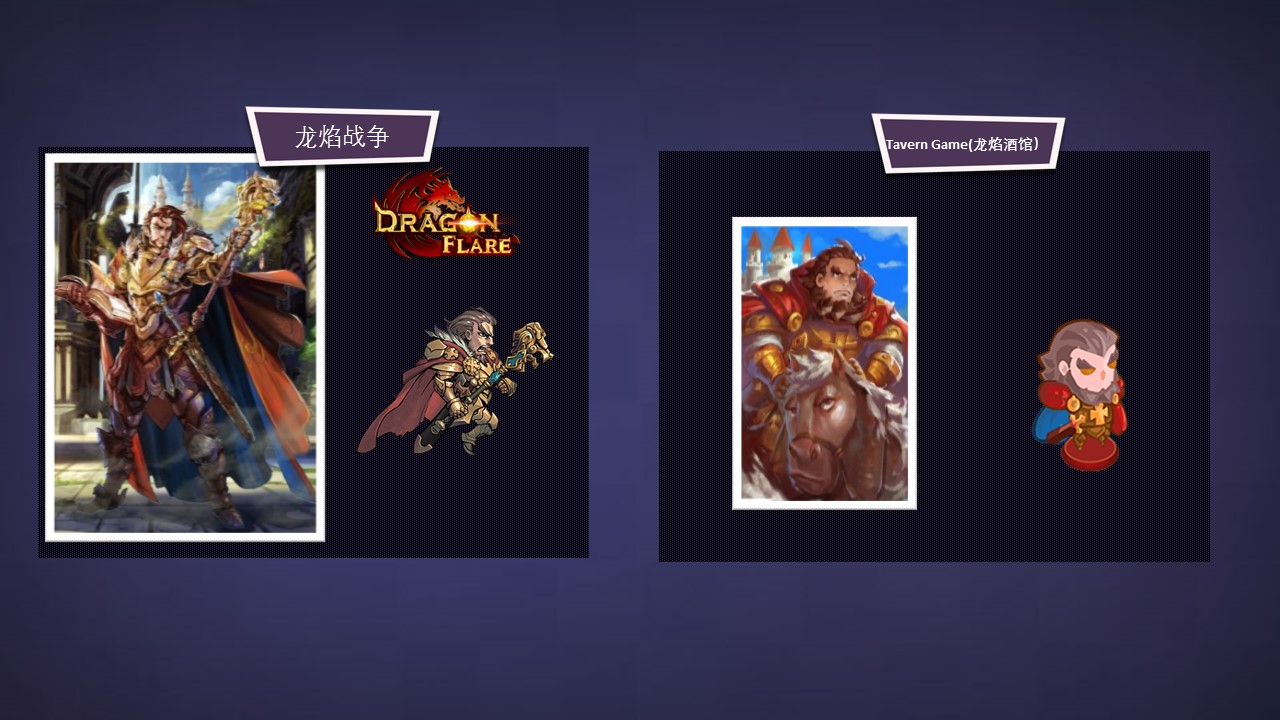
Iterating on the core prototype
Stage One
At the first stage, we knew we wanted a project centered on competitive PvP that we could develop within six months. Everyone had different ideas about what it should be. Suggestions included dice battles, RPGs with dice-based combat, and a social MMO in which dice controlled movement.
Below are meeting notes for one of the more developed ideas. Each character would roll a die, and matching values—two twos, for example—could activate an ability. That was the central idea, with many additional rules around it.
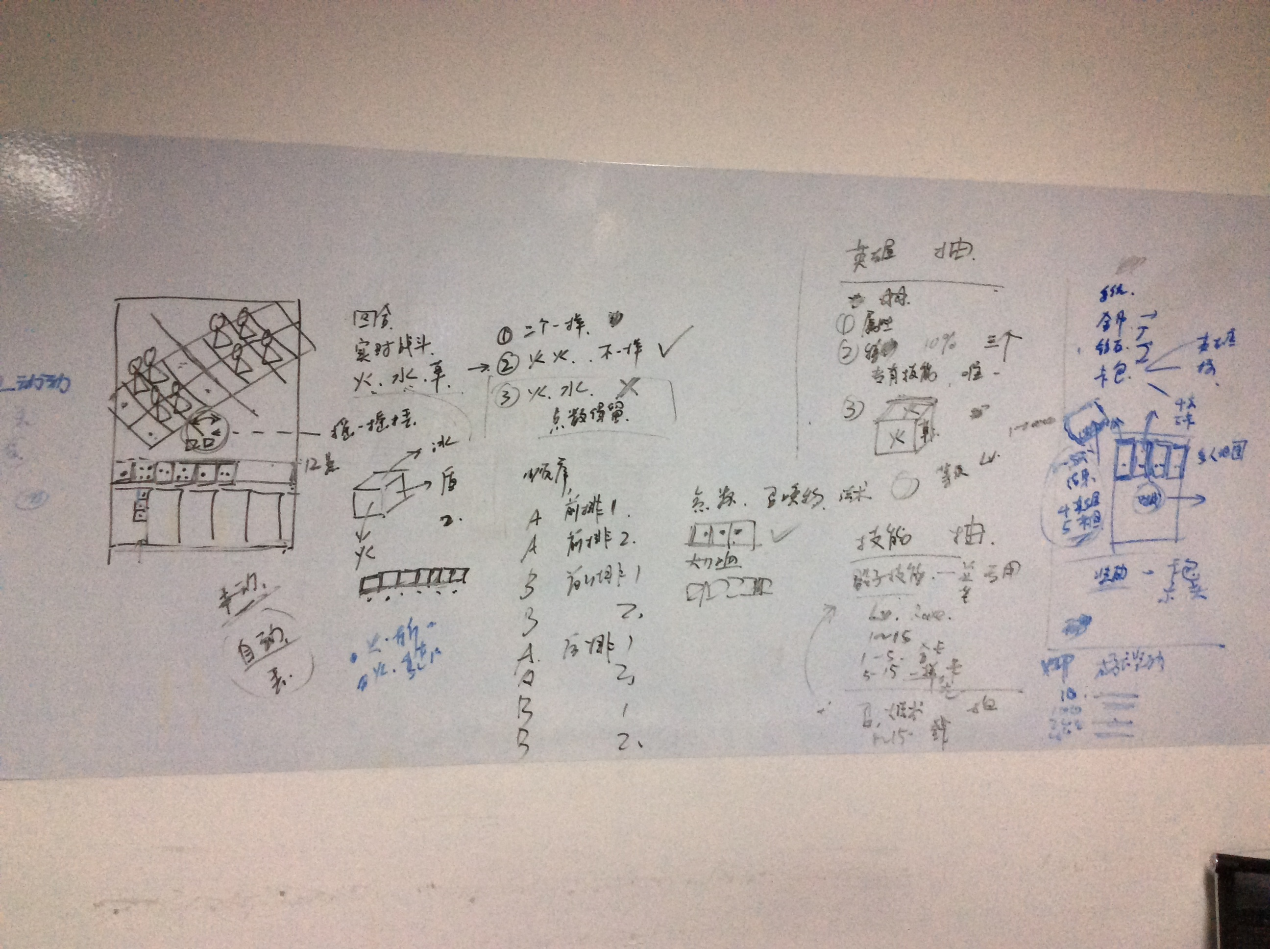
Stage Two
After trying various ideas, we settled on several points:
1. The Dragon Flare setting.
2. Dice—I am not entirely sure why I was so fascinated by them.
3. Trading-card-game elements—many of us liked Hearthstone and Magic: The Gathering.
We then broke down Monopoly, a classic forerunner of dice-based board games, and analyzed its components.
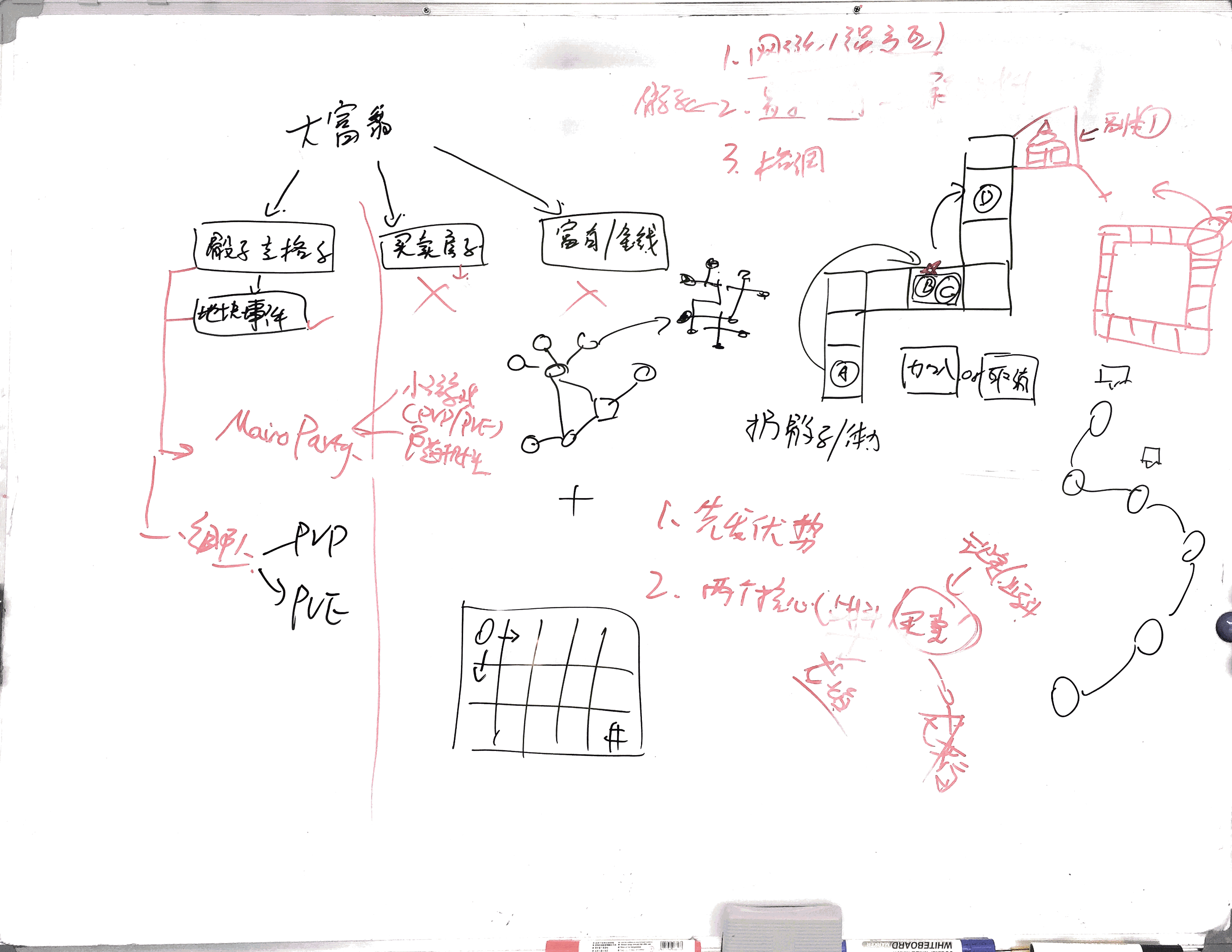
Please forgive the handwriting; game designers really can be this bad at it.
We ultimately kept dice-based movement and tile events, while removing buying, selling, trading, and earning money.
Then we began writing the first version of Duel Tavern's rules.
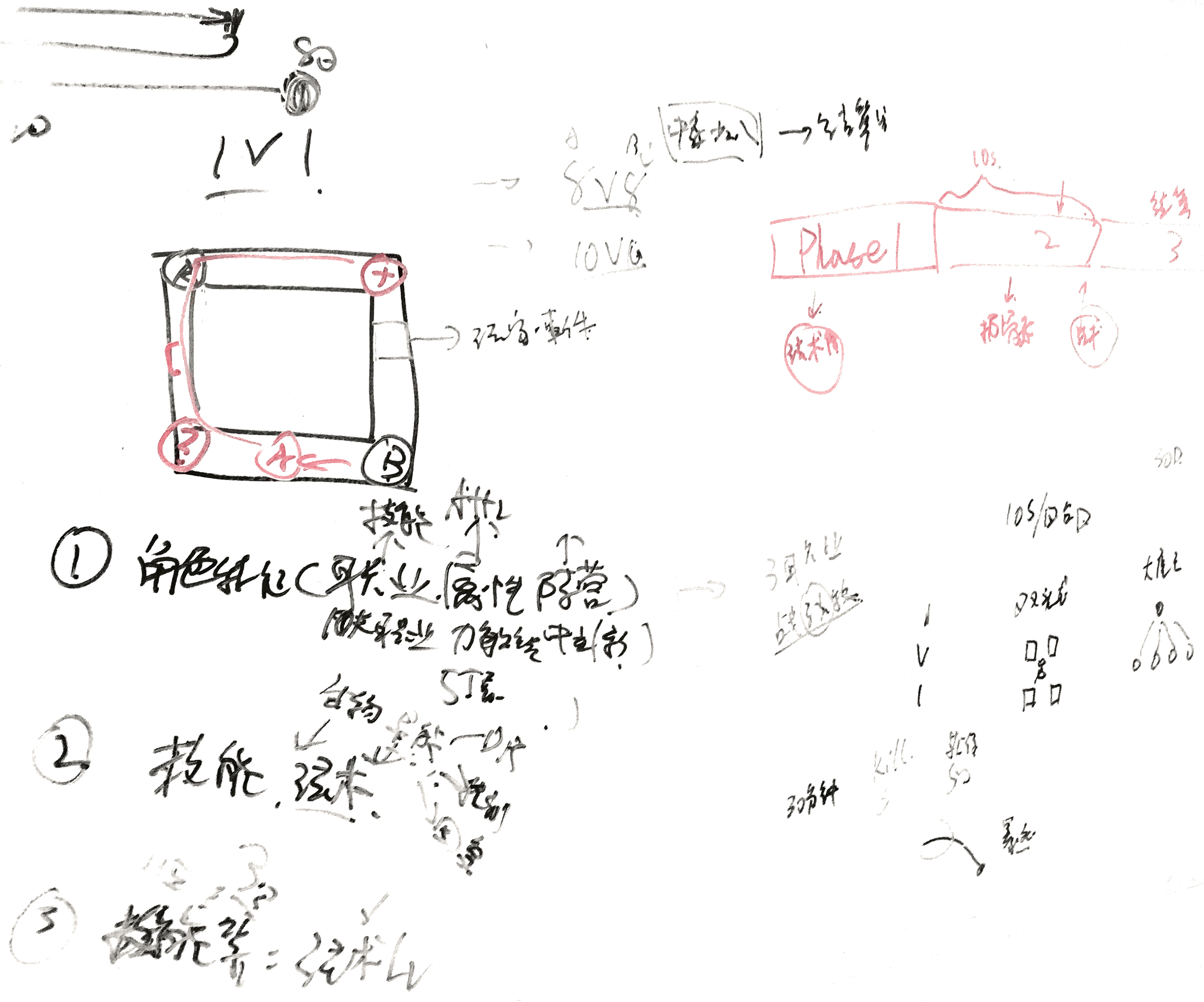
You can just about make out from this image that the earliest version of the game had a spell phase.
A player's turn proceeded as follows:
1. Play spell cards.
2. Roll the dice.
3. Place minions and carry out related actions.
4. Resolve the turn.
After trying this system several times, we discarded it. It was too cumbersome and made games take too long.
Stage Three
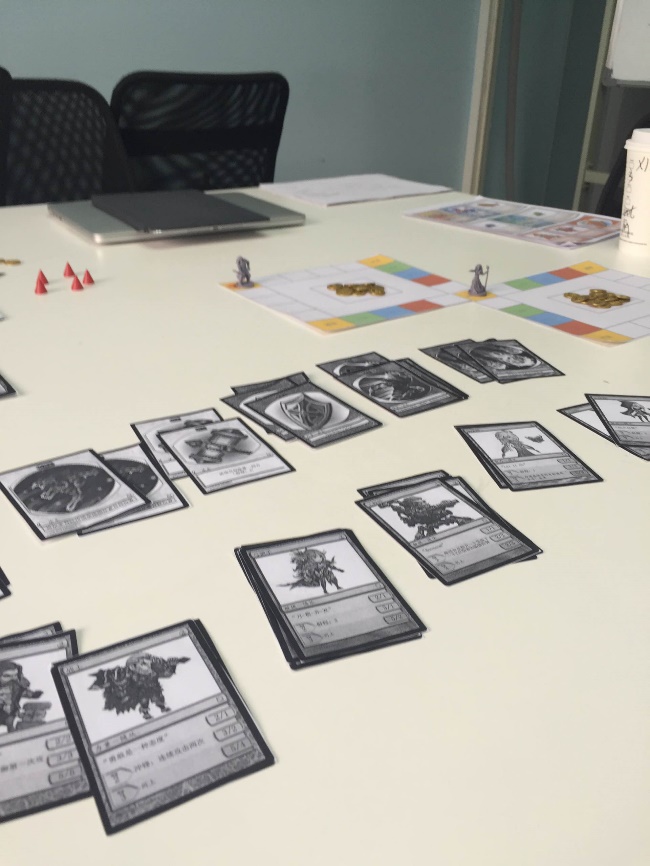
At this stage, we began physically making the board-game version. We had tested the earlier ideas through tabletop simulation, found them feasible, and moved into production.
Making the cards was straightforward. Since we were using TCG elements, we could produce them quickly with the MSE editor. These were the first cards; 1, 2, and 3 indicated their advancement levels.
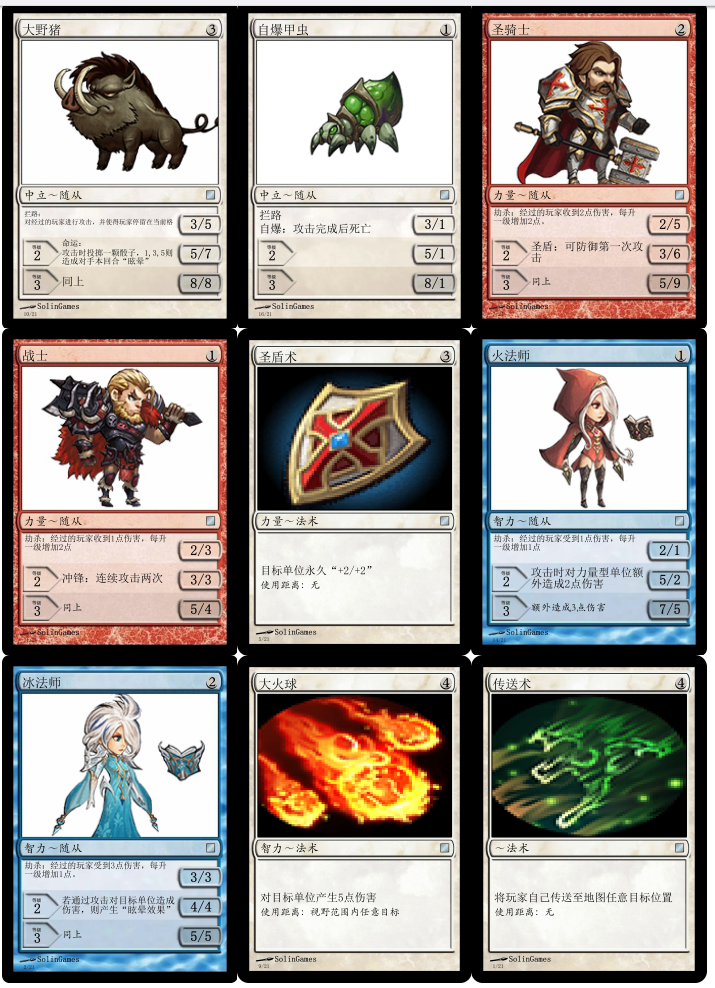
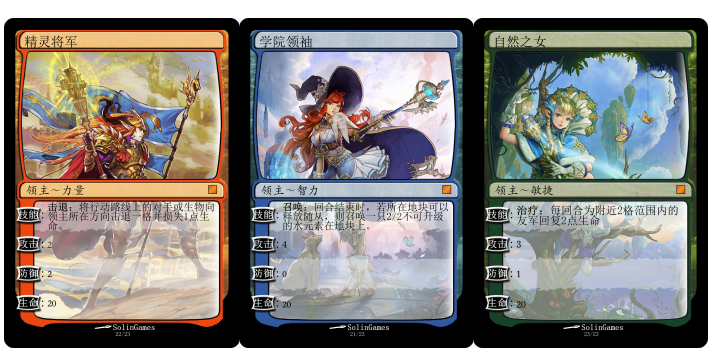
Next came the map. Our first attempt looked like this:
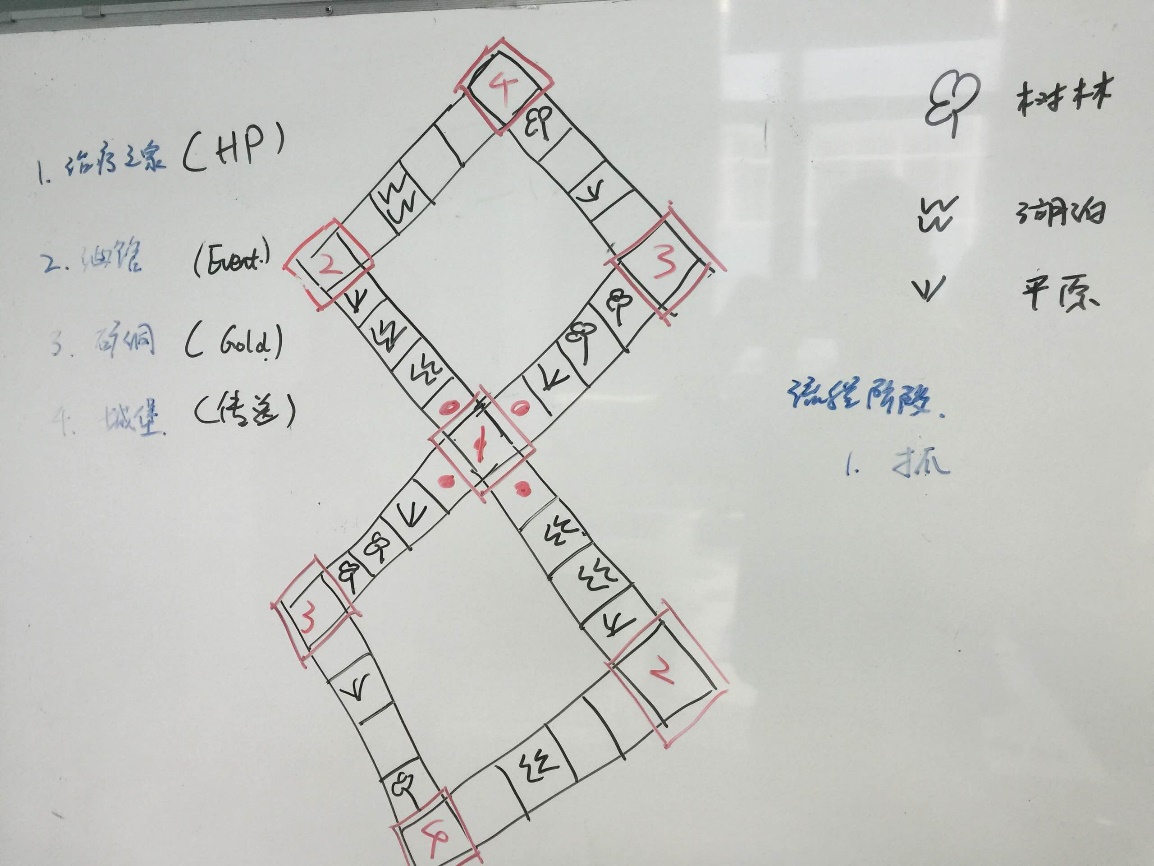
Our lead artist could not bear looking at it, so we made this version instead:
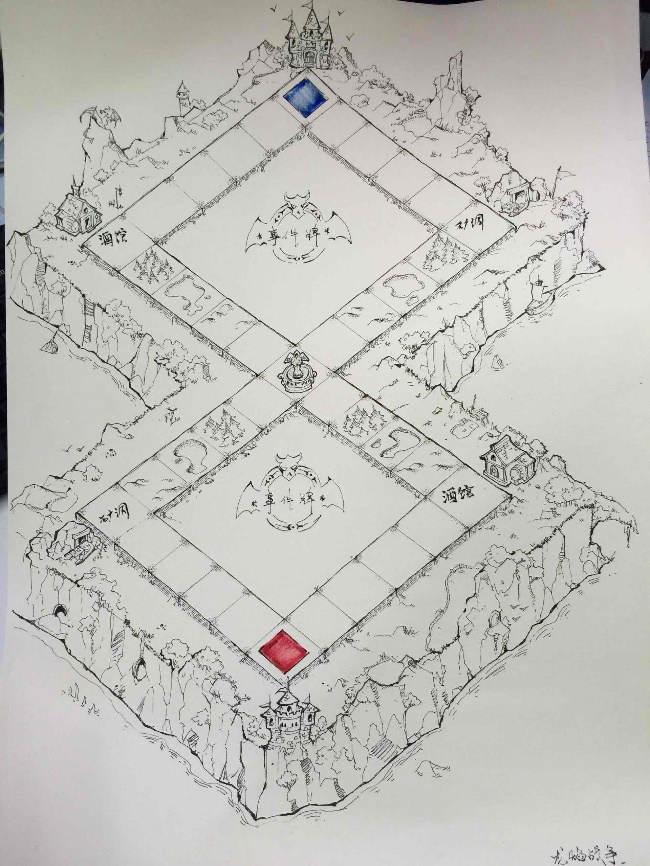
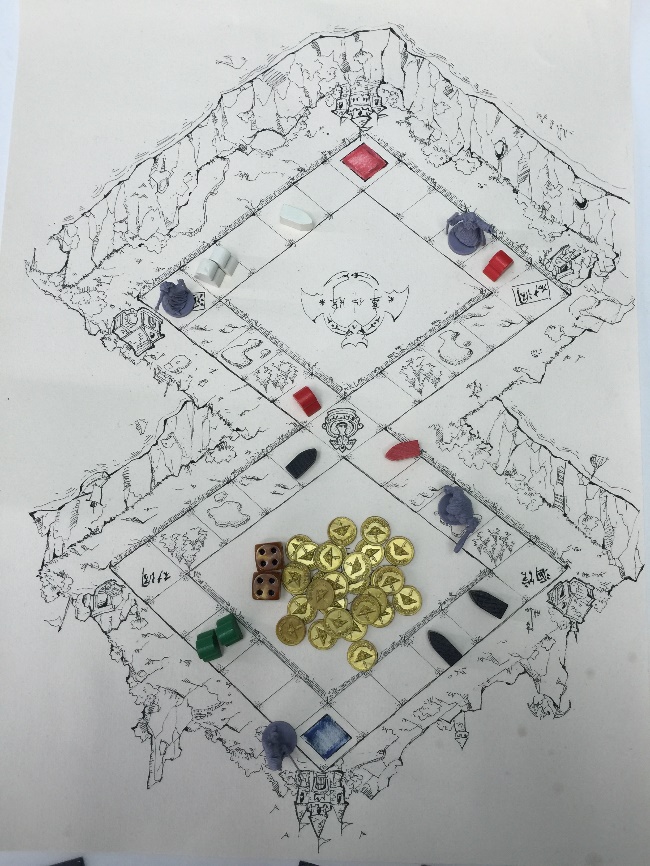
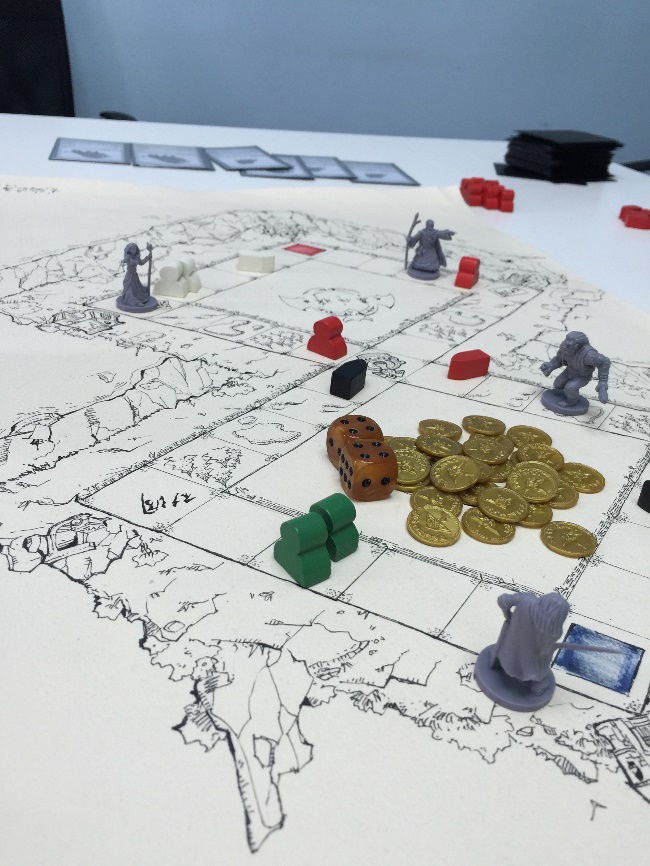
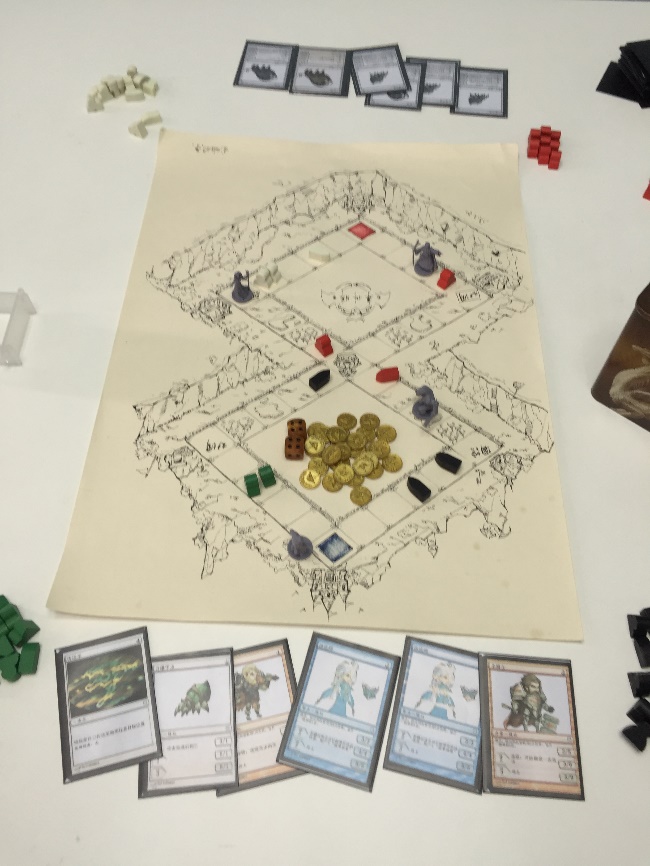
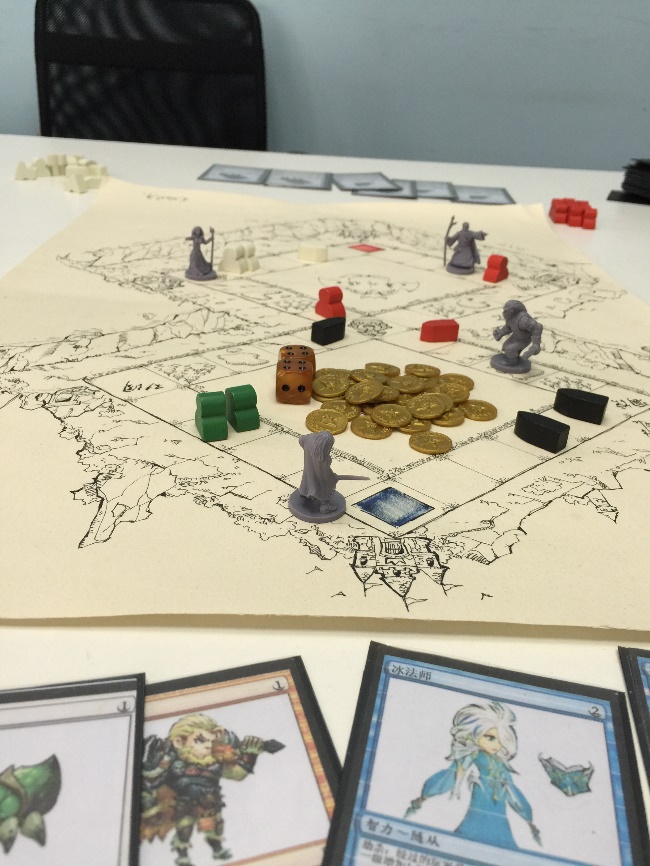
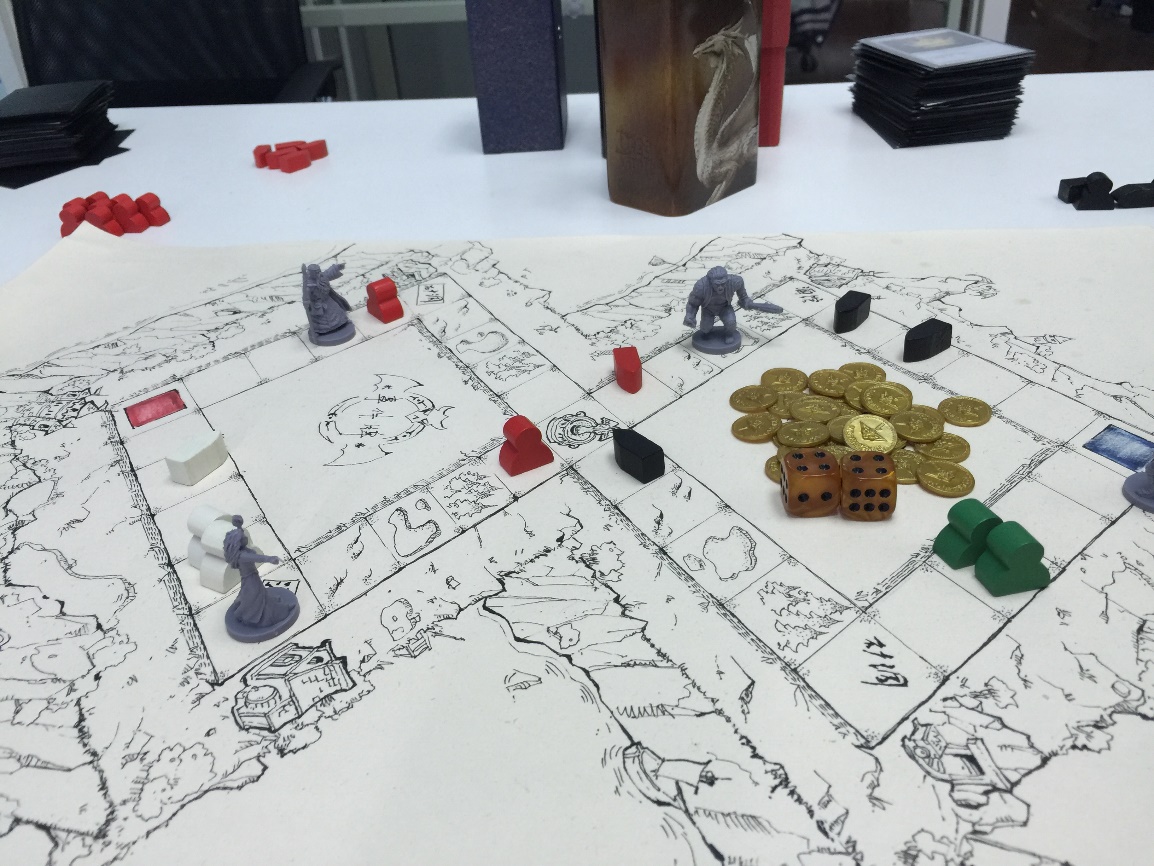
Through repeated tabletop-prototype iterations, we eventually produced a reasonably complete board-game version.
About us
We are a young developer founded in May 2014. Like many game-development start-up stories, ours began with a few old friends who had grown tired of the institutional structures and mass production of large companies. After nearly ten years in the industry, we felt capable of—and eager to—making something original, so we founded our own company. We have created three games: Dragon Flare, MEET, and Duel Tavern, called TavernGame in these materials. Duel Tavern is our third release. We hope you enjoy it.