Development log / Full article text
Origins: Where a Project Begins
I believe every game project has an origin: a producer or creative lead's desire to express something.
Full text of the historical development log. Statements and links reflect the time of writing; text within the original figures is unchanged.
I believe every game project has an origin: a producer or creative lead's desire to express something. At Tencent or NetEase, it might be part of a strategic roadmap. At a small company, it might be the next business venture on which you stake everything. But there is always a project in which you want to explore something that particularly interests you. From its very beginning, MEET was strongly driven by that desire to explore and express. It was not yet called MEET then. Inside Solin Games, every project received a color-based codename; MEET was OrangeGame. The screenshot below shows the three design principles we established when the project began, more than a year ago. Looking back at April 2015 brings up a lot of feelings. We are now in month fourteen, and I am the only original creative lead still on the project.
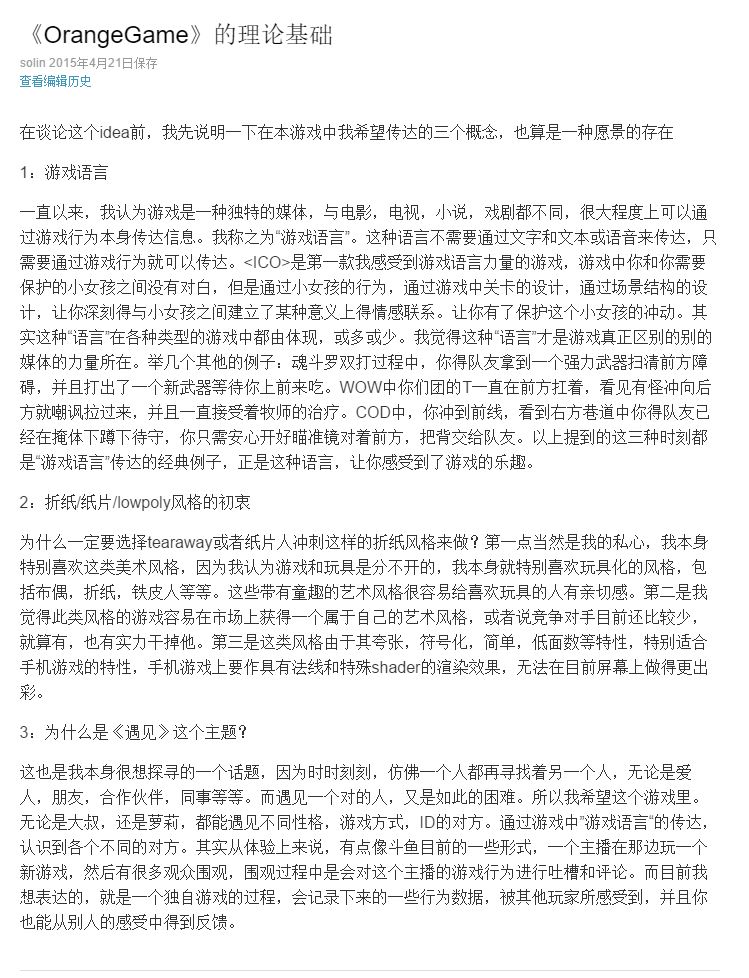
Those three principles have guided MEET throughout development. The finished game may fall short of them in some respects, but looking back over the past year and more, we have kept working in that direction, even if we have not done everything as well as we hoped.
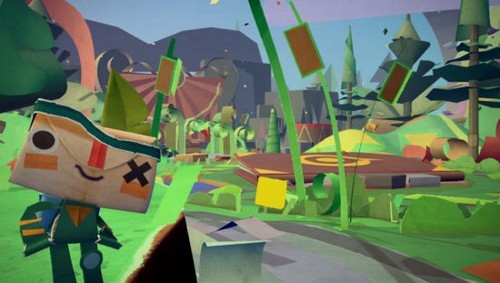
When talking about a project's origins, too much theory or abstract language can feel dry and unconvincing. Most people would probably use other games as examples or comparisons. For our visuals and the overall tone of the game, these were our main references:
Tearaway
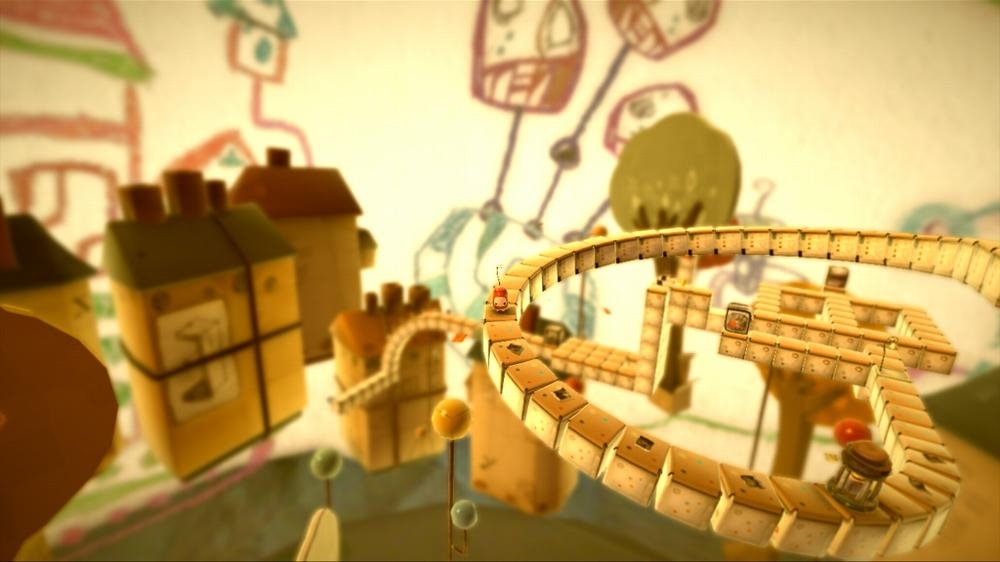
Ilomilo—a perhaps less well-known game whose theme of meeting and toy-like character have always stayed with me.
The first stage of the Pikmin minigame in Nintendo Land on Wii U.
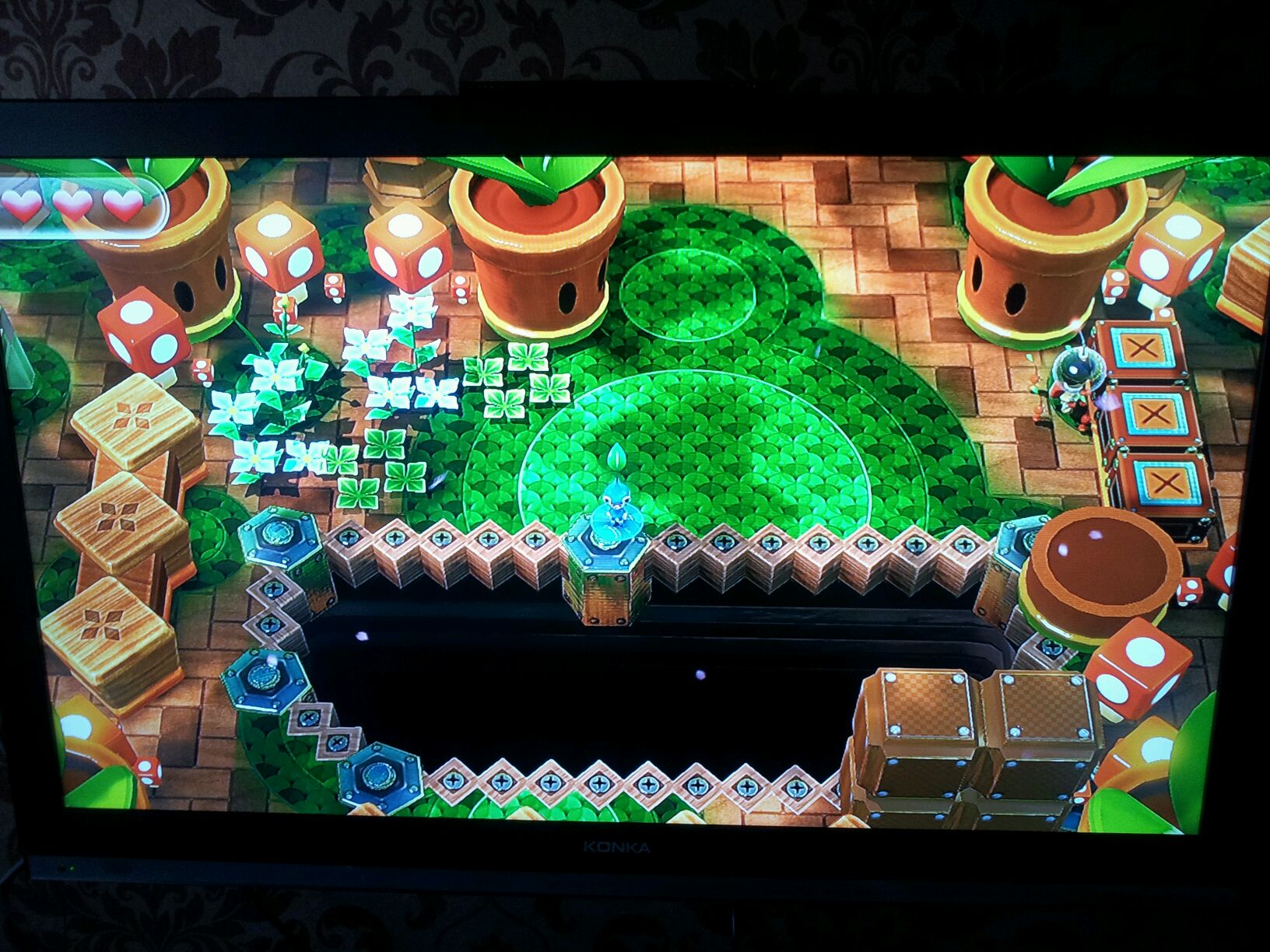
I have always loved this modular, toy-like approach to design. As a Nintendo fan, I probably need not say more.
On mobile, a game called Land Sliders came out roughly six months after we began development. Its low-poly, toy-like art style was exactly what we had been pursuing, so it became another important reference for our subsequent art production.
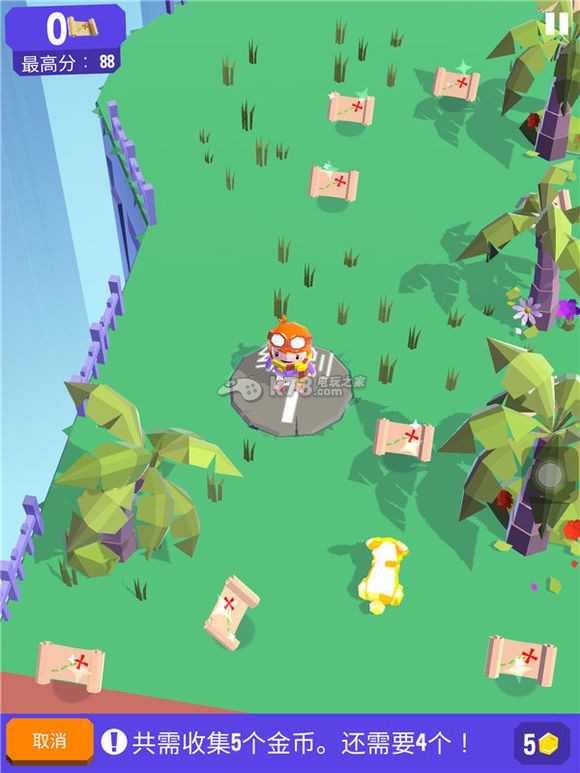
After all those visual references, what did our team actually do? We started exploring concept art while the core gameplay was still only a vague idea. I had not worked this way before, but in retrospect it was meaningful. The main reason was practical: our programmer had not yet joined, so art exploration had to come first.
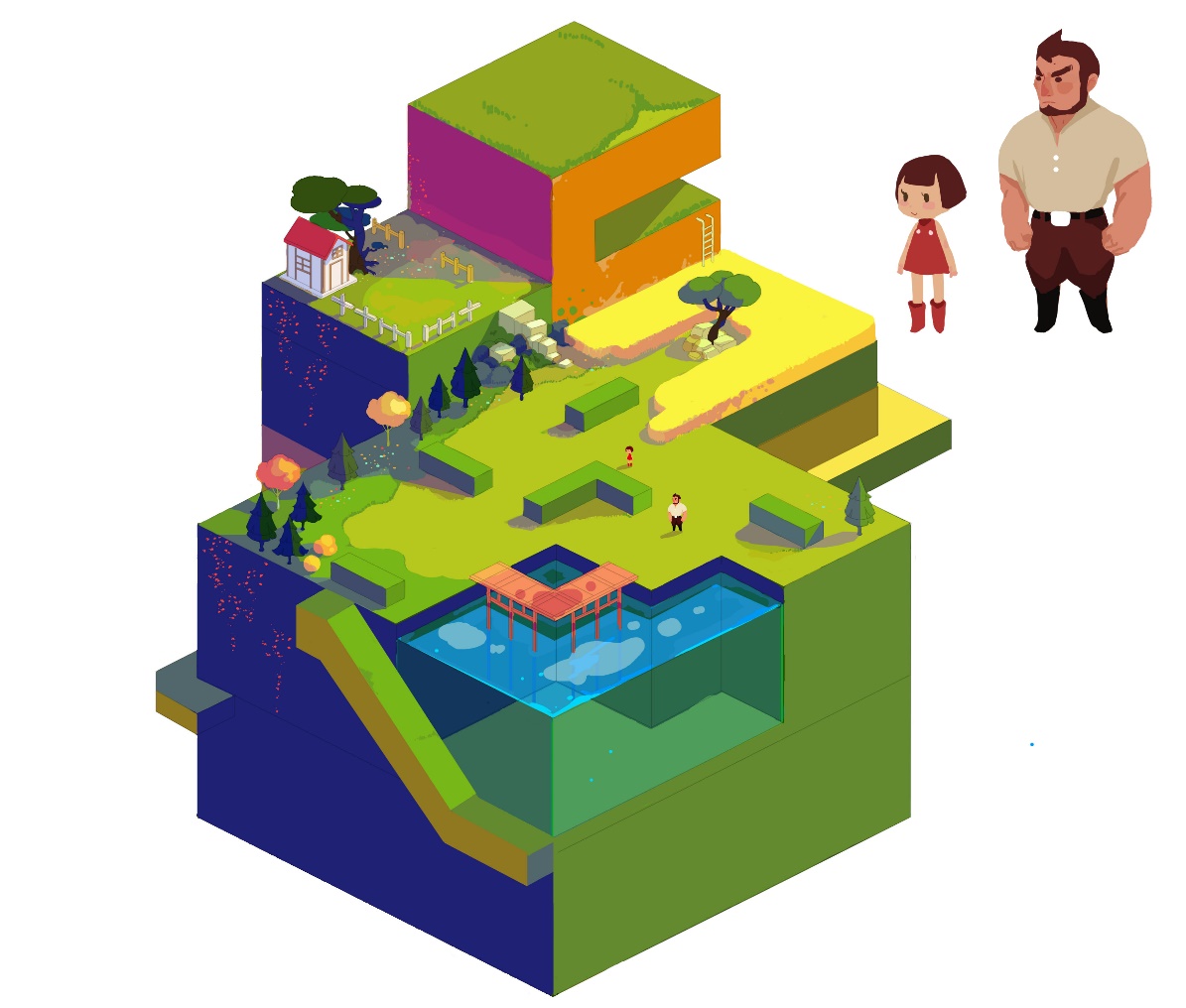
We began with concept art. Since the style was not that of a conventional game, it took some searching to find the right artist. Eventually we found yaoyao, an artist at Tencent in Shenzhen whose work seemed to fit what we wanted. We invited him to help establish the overall style. The image below set the tone for the game.
The first concept-art direction. I know those of you who say the first version was the best really mean it…
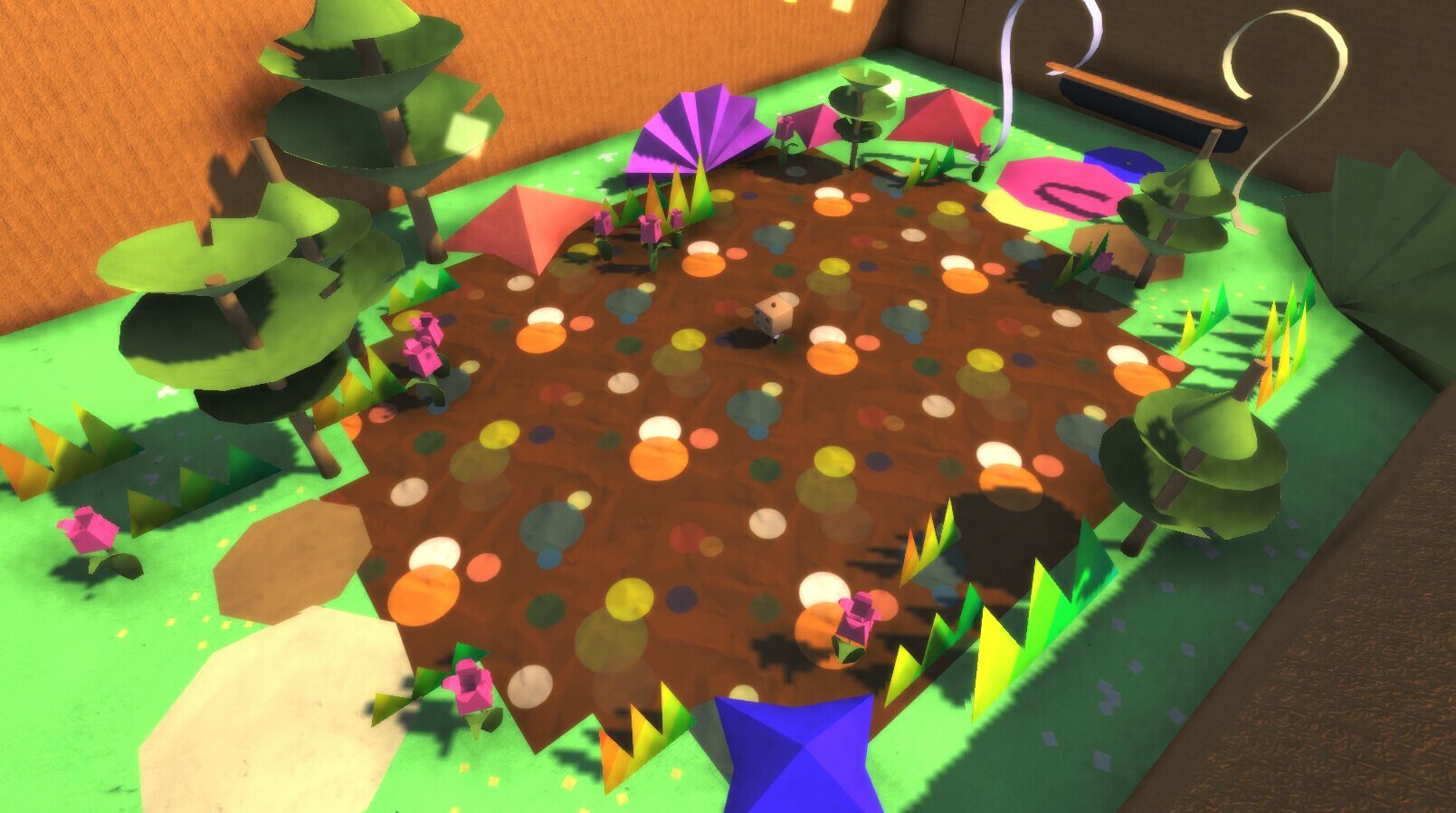
Remote collaboration proved difficult, and various other uncertainties made this approach hard to sustain. The schedule of the company's main project also left us with just one 3D artist continuing the visual exploration. The in-game result at that stage looked roughly like this.
The first 3D environment test—essentially an experiment to see whether a Tearaway-like look would work on a phone.
Programming progress at this stage was virtually zero, so there is little to say about it here.
On the design side, the girl's section was conceived as a top-down escape game built around evasion, somewhat like The Last Guy on PSN: the player would move between points while avoiding monsters. The man's section drew on the games cited in the Chinese original as Qihuan Sheji and Minigore 2, using movement on the left and shooting on the right to deal with enemies. At that point, there was little explicit thinking about meeting, interaction, or emotion. We simply thought that if the girl's gameplay carried over into the man's section, interaction would naturally follow, and that existing reference games would guarantee a solid basic experience. Looking back, bringing any established gameplay model to an 80-out-of-100 level of quality is already difficult for a small team. We seriously underestimated that challenge.
These are some recollections of MEET's origins, roughly between March and May 2015.