TGDC 2021 · FULL TALK & Q&A
Creating Player Stories: Full Talk Transcript
The TGDC 2021 talk and audience Q&A: designing player stories through identity, motivation, challenge, trade-offs, and outcomes.
Speaker: Solin Zhang (Zhang Fan Jun). This is a paragraph-aligned English translation of the Chinese transcript published by Tencent Game Academy, prepared for this website; it is not an official English transcript. References to “currently,” “recently,” and project status describe the time of the 2021 talk. Videos mentioned in the talk are not embedded. Original slides are available in the appendix.
Hello everyone. I am Solin Zhang Fan Jun from Tencent Interactive Entertainment's MoreFun Studios. Today I would like to share a talk called Creating Player Stories.
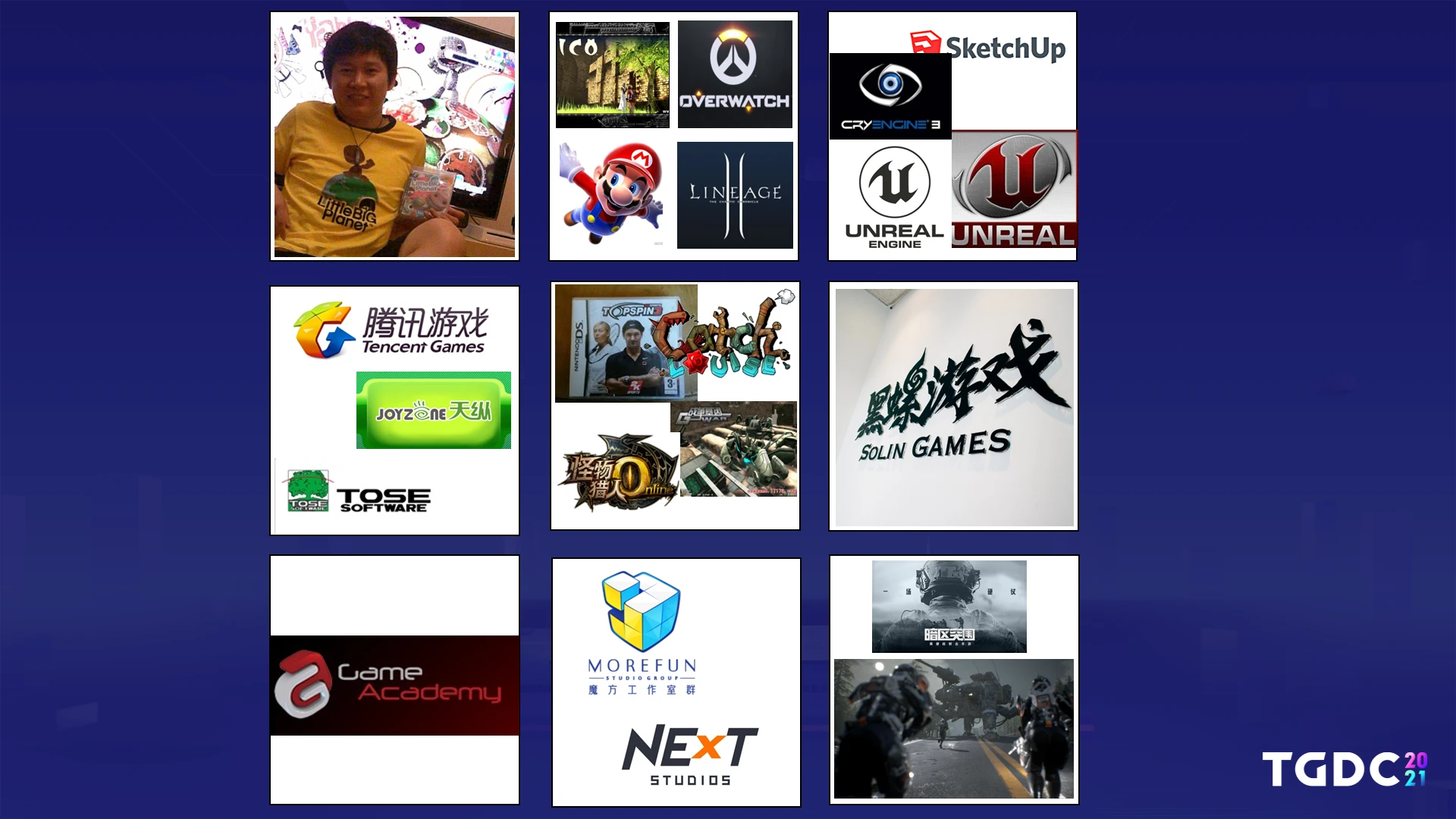
Like many game designers, I was a dedicated player before I entered the profession. The four games shown above are my favorites. I began in level design, becoming familiar with engines and editors such as Unreal 3, Unreal 4, CryEngine, and SketchUp. I have worked at international companies and major studios, on action games, shooters, card games, and other genres.
Inspired by other entrepreneurs, I later founded Solin Games and developed three original games. As I developed my own methods, I also wanted to help more people enter the industry, so I trained quite a few game designers. I subsequently returned to Tencent, working at NExT and MoreFun. My current work and design focus are primarily on shooters.
Designing online games
So far, I have worked on nine products. Looking back, seven of them were PvP games. That led me to ask whether designing online games differs substantially from designing single-player games. This has become one of my main questions over the past few years.
People have many different ideas about online game design. To me, the biggest difference from single-player design is how we design for the players themselves: who are they, and what motivates them? Those questions are very different.
This is a large subject. I had hoped to explain it through more detailed methods and articles. Why share it at TGDC? Mainly because, as I see it, most designers at Tencent are developing online games.
Yet GDC talks and many design articles say relatively little about online game design. They tend to focus on single-player games, narrative, levels, and the design of challenges. I wanted to use this opportunity to share some modest experience and offer another perspective on how online and single-player design differ.
Traditional game design shapes a player experience, inviting a target audience into an established framework. Designing for player-generated narratives is more like providing a setting and mechanisms that allow more interactions and possibilities to arise between players.
Most of us have heard something about player-generated narratives, but the concept has not been precisely defined. Let me venture a definition: through a game's systems and setting, a player forms a unique story experience with other game entities or players.
Consider a film or a game with a linear narrative: the experience follows a fixed line, and different players receive broadly similar experiences. Repeating it does not fundamentally change that experience. Unique player stories are not confined to online games, however. Many nonlinear and open-world games already include designs that support player-generated narratives.
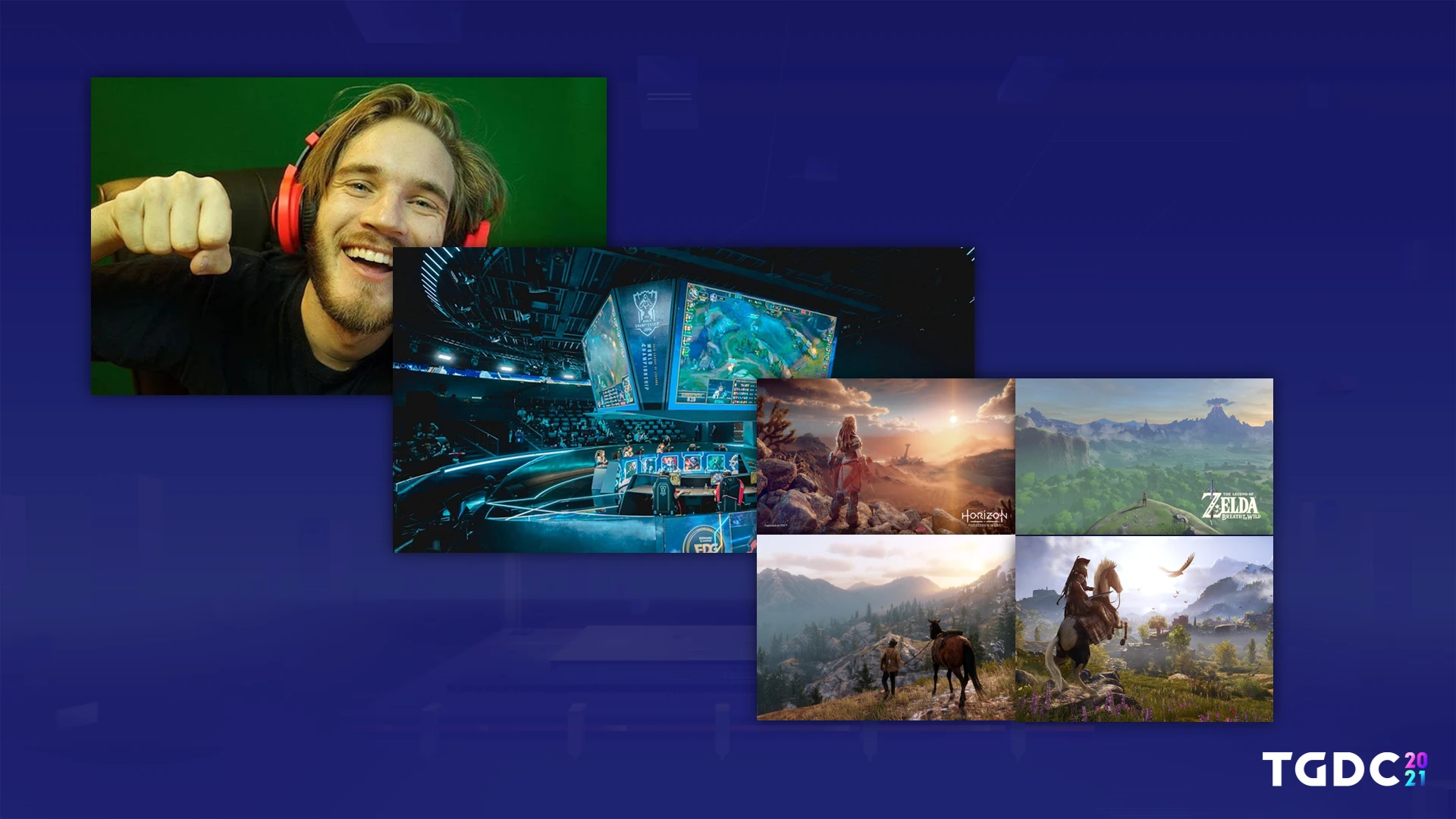
Think about why watching a streamer play can be so entertaining. Their happiness makes you happy, and their failures can make you happy too. What is distinctive about the experience? Why do streamers choose certain games? What guides their choices? Could the opportunity to create something of their own make a game more attractive to them?
Take esports: are any two MOBA matches identical? Players remember a particular match on a particular date, and it can become a classic. Why are open worlds increasingly popular? Does every player take a different path through Breath of the Wild? Does each one have a distinctive experience?
I began wondering whether the increasing attention paid to streaming, esports, and open worlds could be connected, even though they seem so different. After thinking about it, I felt one important connection was that distinctive player experiences have value as something people can share. Players are also paying more attention to their own unique experiences.
The experience of player-generated narratives
The reasons may be complex, but I wanted to examine what these games share at the level of design. I believe it is emotional connection. Viewers bring their own feelings into a streamer's story, their own playing experience into an esports match, and their instinct to explore the unknown into an unfamiliar game world.
In traditional games, experiences are designed: learning curves, skill challenges, emotional arcs, and so on. Many experiences in online games are designed too, but there is more emergent gameplay. More of the experience comes from stories between players, or stories arising from players' own actions.
Game design becomes more like providing a stage on which players create their own stories. How do we design that stage? How do we allow stories to happen while helping players form bonds and emotional connections with the world? Those become questions for the designer to investigate.
Many of us grew up playing single-player games. Their stories, plots, and mechanics could move us and draw us in. Yet recommending such a game to a friend can be difficult: the feeling is personal, hard to communicate, and hard to explain.
That is why I believe distinctive, shareable, player-generated experiences can have broad market impact. If you describe a real story that happened to you, might someone be more inclined to listen, agree with you, or follow your recommendation? It is more persuasive.
Imagine a hunter in an ancient community telling people around a fire about the animals they hunted that day and how impressive the hunt was. Telling another person about your own experience is very similar, because you lived through it. The two points I want to emphasize are shareability and a story arising from your own experience.
The player stories I am discussing are quite different from what we usually mean by stories in a traditional linear game. They are not the designer's intended experience; they are your own experience, rather like spending yesterday at a theme park.
A classic player-story sentence goes something like this: I went somewhere with someone, we did something, and this is how it felt. It is an ordinary thing to say to a friend, but it already contains several important themes.
Who are you, and what are your social relationships? Where did you go? Why did you go there? What did you do? How did you feel afterward? This simple sentence already contains the possibility of a player-generated narrative.
I drew several elements from that sentence to consider both what players do and how designers can support the experience. A game's capacity for player stories is often not apparent at the beginning. It emerges as players understand the game and the server's social ecology changes. In many MMOs, the unforgettable moments are guild wars or major server-wide events in which you took part.
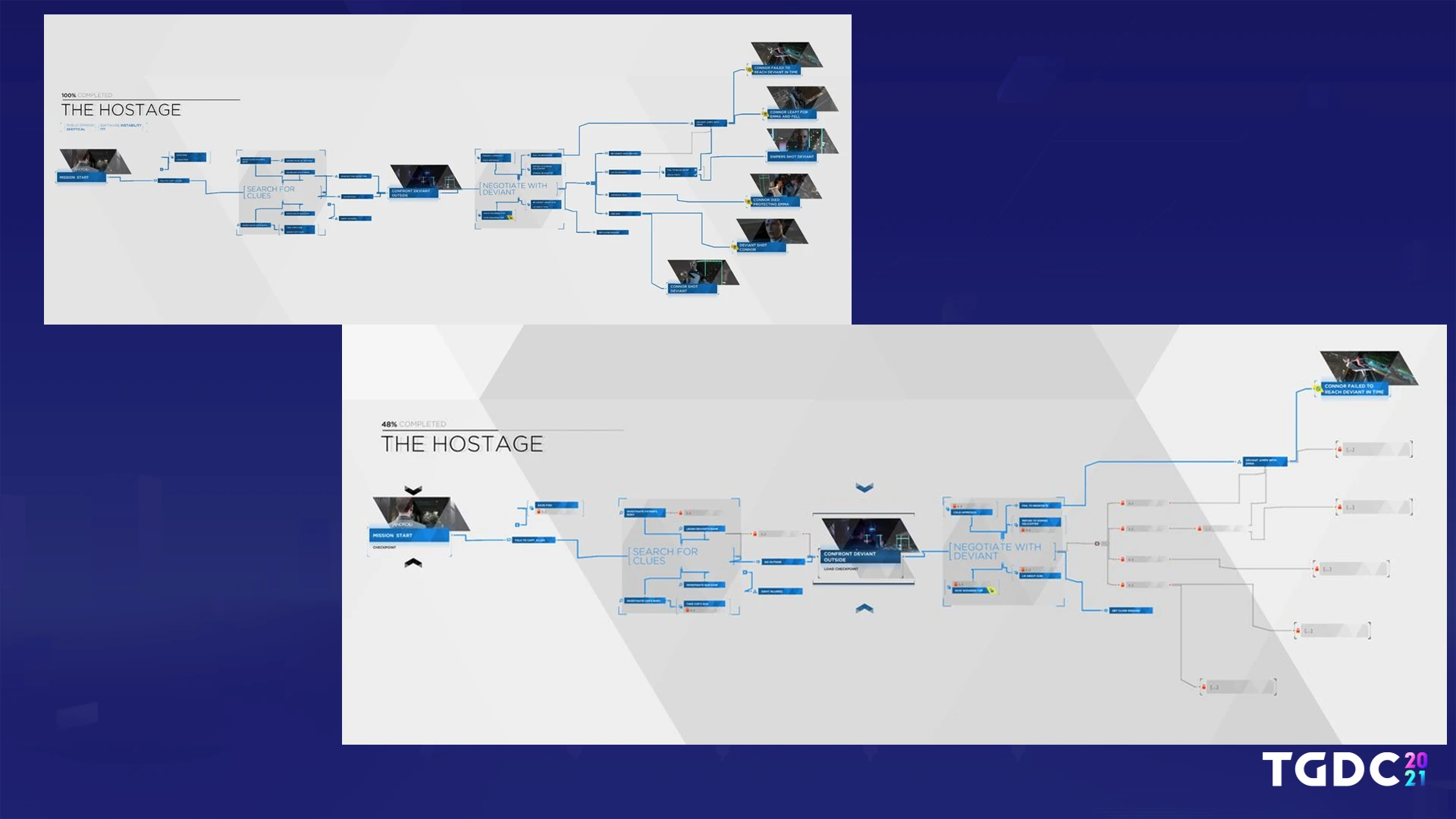
The image shows the story branches in Detroit: Become Human. Traditional games can offer branches for players to choose, leading to different endings. The ending a player wants is closely connected with the choices they make.
But building those branches takes an enormous amount of work. Every choice and branch represents more work for the developers. A player eventually makes their choices and reaches one ending, while the studio has had to create all those possibilities. We can see traditional developers and single-player games moving toward the design of distinctive player experiences too.
Methods for designing player-generated narratives
Next, I would like to discuss some design methods. These are my own views, but I hope they offer a useful perspective.
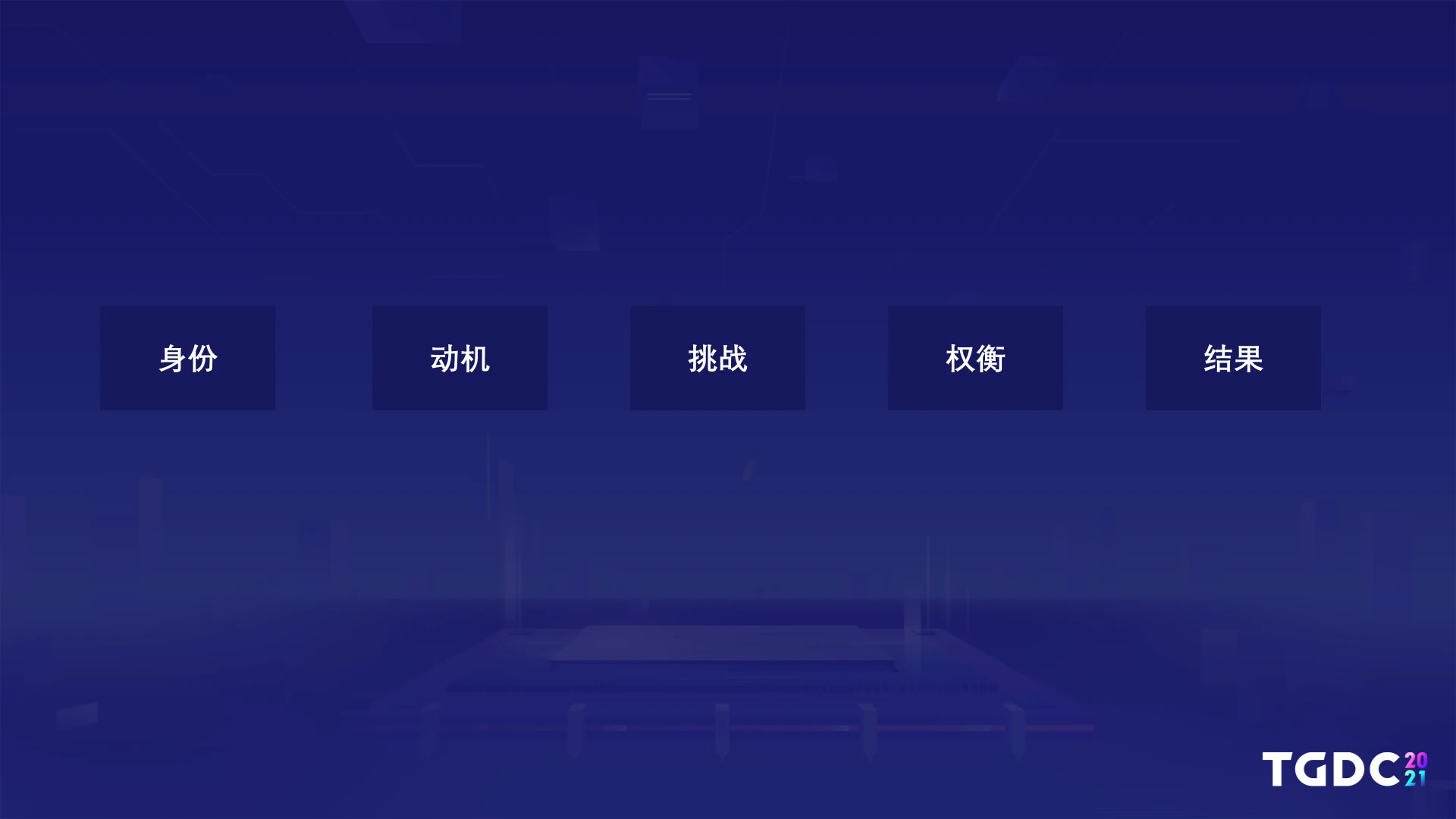
I have distilled them into five words. The first is identity: who are you? How are you different from other people? What makes you you?
Motivation: why do you want to do this? Is it only to win, to be with friends, or because you absolutely have to succeed? Or would failure be acceptable to you?
How difficult is the challenge? Is it within your capabilities, and can it be made visible to others? Rather than an extremely difficult intellectual puzzle, perhaps it is a challenge in which others can see you take on overwhelming odds.
Then there are trade-offs, rather than simply choices: the thoughts and psychological judgments you make once you have some understanding of your abilities and the challenge. Finally, how is the outcome presented? Did you achieve your goal, and does the way the result is presented feel satisfying?
1. Identity
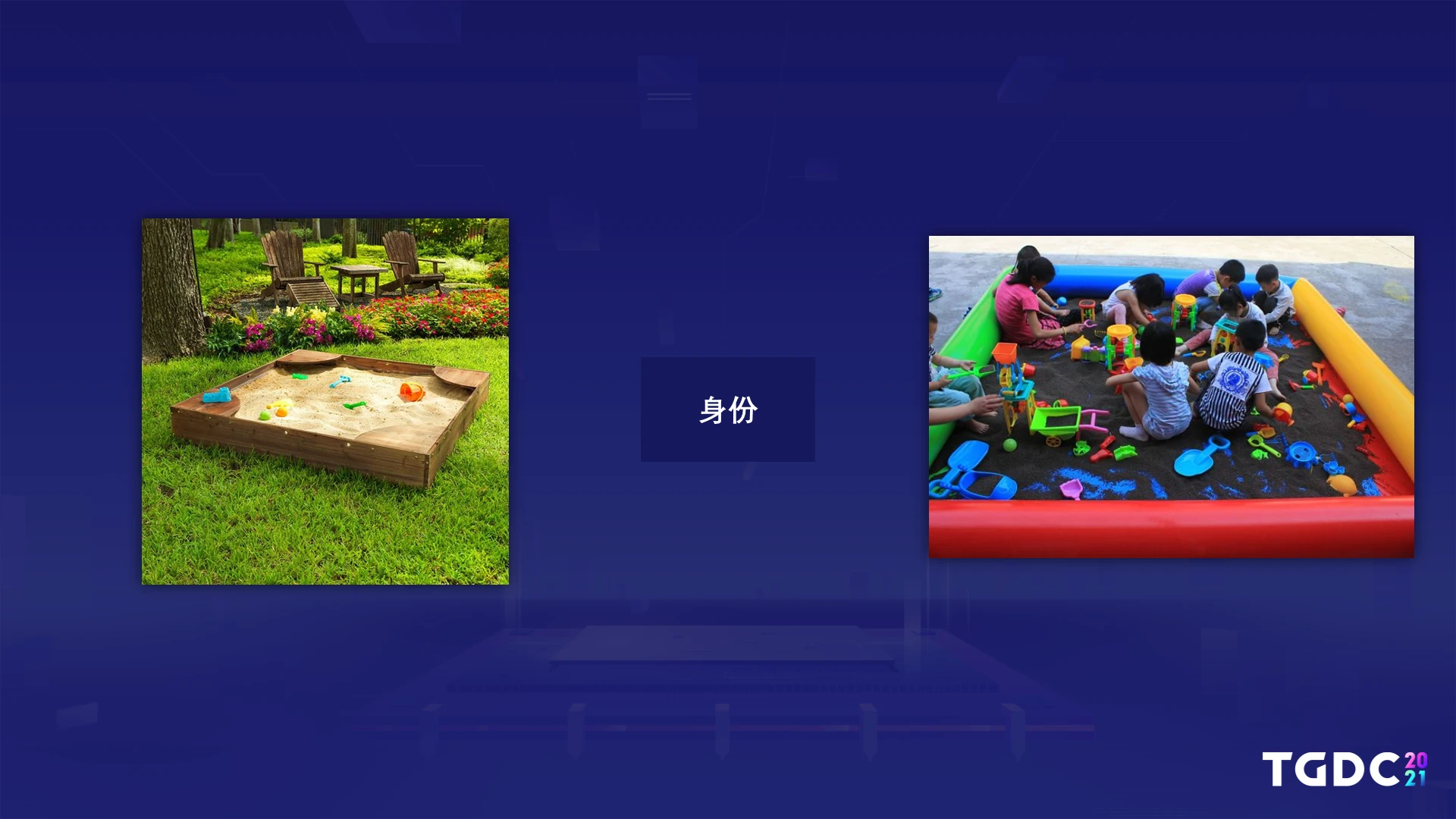
Let us start with identity. A sandbox gave me an interesting example. Everyone knows what a sandbox is. I once watched my daughter play in one with tools for shaping sand. She soon lost interest. Later, I found a similar sandbox in a shopping mall; she could happily play there for two hours.
I watched and wondered why. A natural division of labor had emerged: some children transported sand, others shoveled it, and others directed the work. Once those social relationships formed, my daughter could play for a long time. This raises an important design question: must identity be established at the outset, or can it develop gradually through play?
2. Motivation
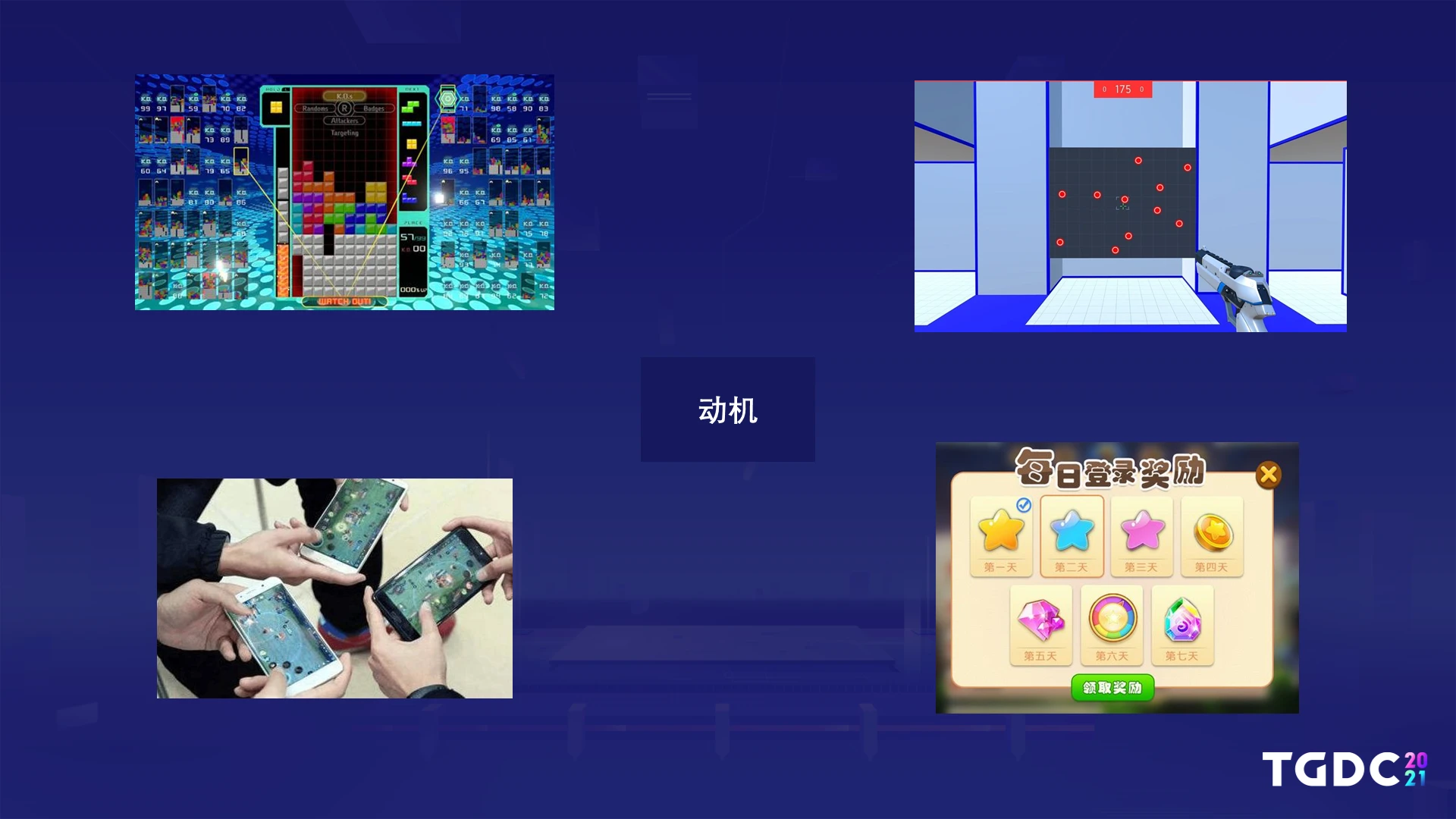
Why did people return to a game as old as Tetris when a battle royale mode was added? Was it only to finish first, or to interact with ninety-nine other people? If a shooter's objective were simply to put a crosshair on another person's head, without a war, a story, or science-fiction elements around it, would that motivation be strong enough? Would clicking red dots alone be sufficient?
When I pick up my phone to play with friends, do I really like the game? Am I responding to social pressure, or is my wife making me play? Do I log in just for the rewards, or do I genuinely enjoy the game?
This suggests a distinction between self-driven game experiences and passive game experiences.
I recently heard an older professor discuss this distinction in a presentation, drawing on flow theory. A self-driven experience comes from the player's own initiative: the experience itself and a clear personal motivation lead the player to move forward.
A passive experience is driven by external motives, such as rewards or challenges the player feels obliged to complete. For motivation, I think the important question is how to create a self-driven experience.
3. Challenge
Challenge is central to game design. I will not go into balance or other design methods here; I want to focus on how challenge contributes to the value of a player story.
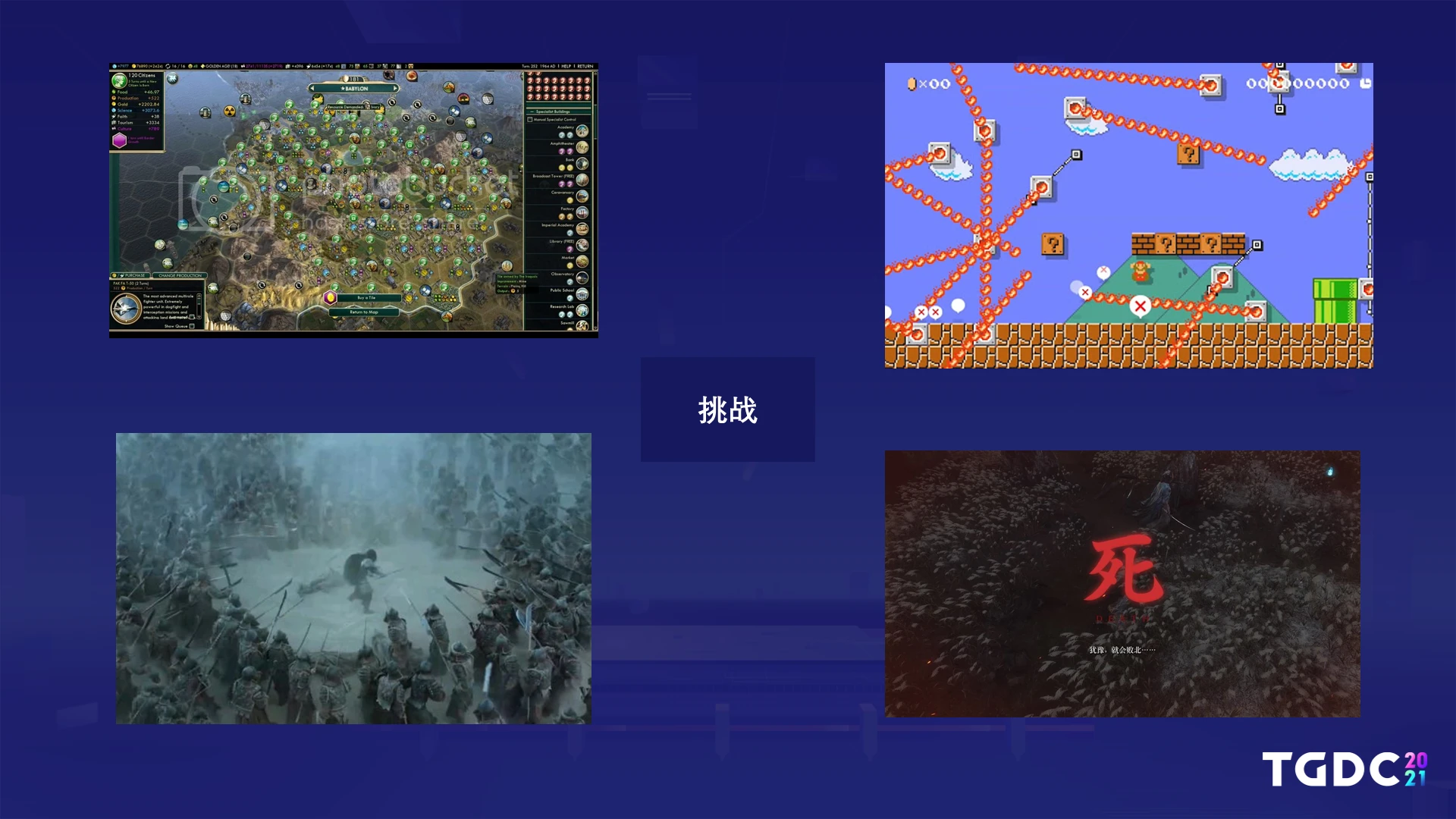
Why are strategy games less frequently streamed, and why are there relatively few major streamers of those games? One reason is visibility: mental skills are harder to show than physical skills. Challenges and skills that are easy to demonstrate are also easier to tell people about. An experience of overcoming overwhelming odds or extreme difficulty is easier for an audience to recognize.
Some of the highest-ranked levels in Mario Maker look completely outrageous. Audiences enjoy seeing someone overcome impossible odds, face danger, or die. Watching a streamer repeatedly attempt a challenge and fail can itself be entertaining.
This resembles a variety show. Viewers want to see people perform remarkable feats, but also fail in all sorts of ways. Imagine contestants crossing a platform above a river: some fall into the water while others make it across. Fall Guys, which was released recently, comes very close to that kind of entertainment.
4. Trade-offs
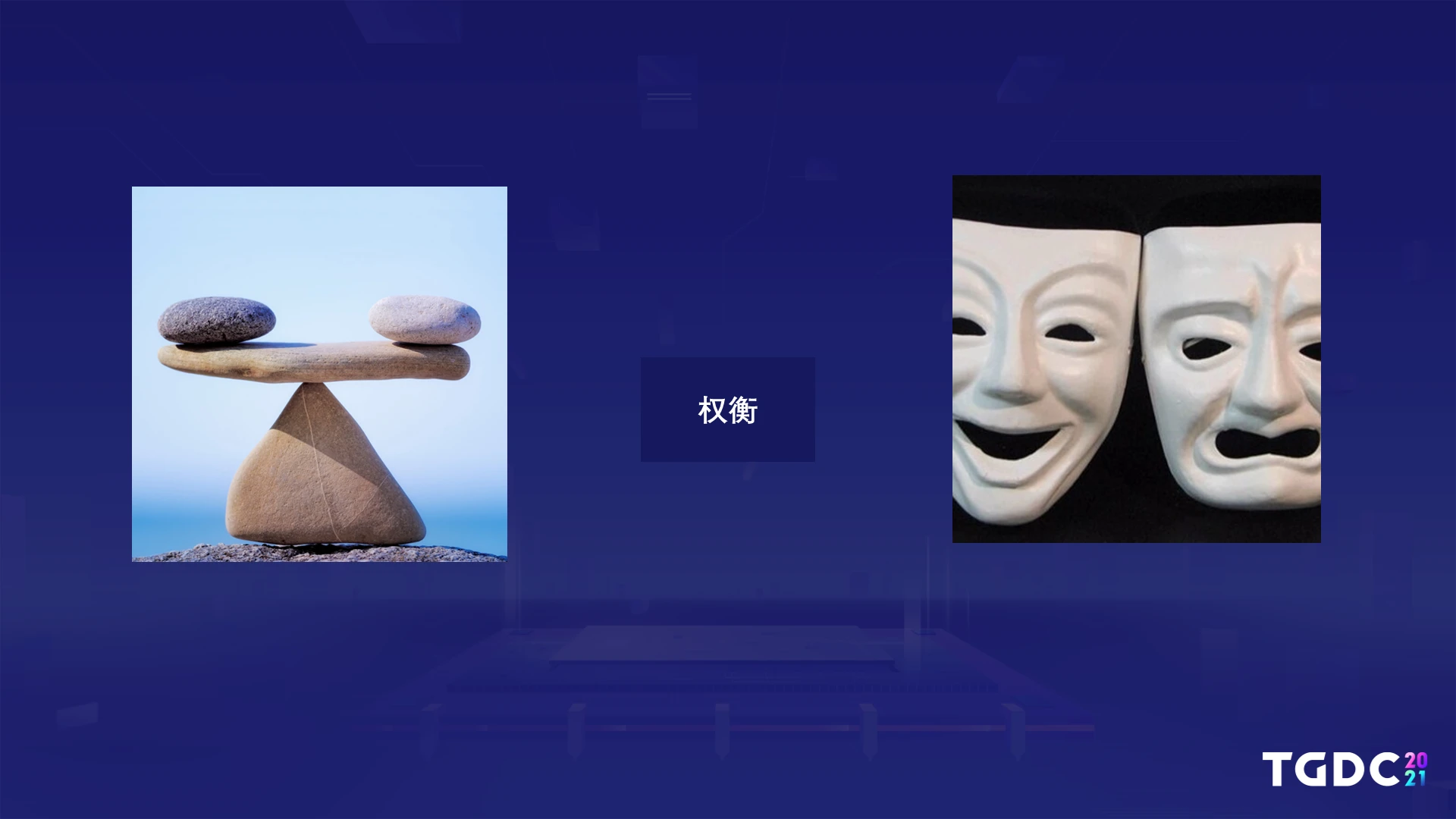
I keep saying trade-offs rather than choices because the distinction matters. It is not merely choosing A or B, but managing your expectations of risk and your capacity to tolerate it. If I want pressure or high risk, I can choose that. If I want something less stressful, I can choose that instead.
Freedom and openness are important in games with strong potential for player stories. A degree of tolerance gives players with different identities and motivations room to choose.
One screenwriting principle has stayed with me: audiences like watching a protagonist make a decision. The hook remains unresolved while we wonder what they will do. Their inner struggle, and the tension surrounding the decision, are things audiences enjoy watching.
These trade-offs can make a game vivid. Whatever trade-off a player makes should produce its own dramatic tension and send the game in a distinctive direction.
5. Outcomes
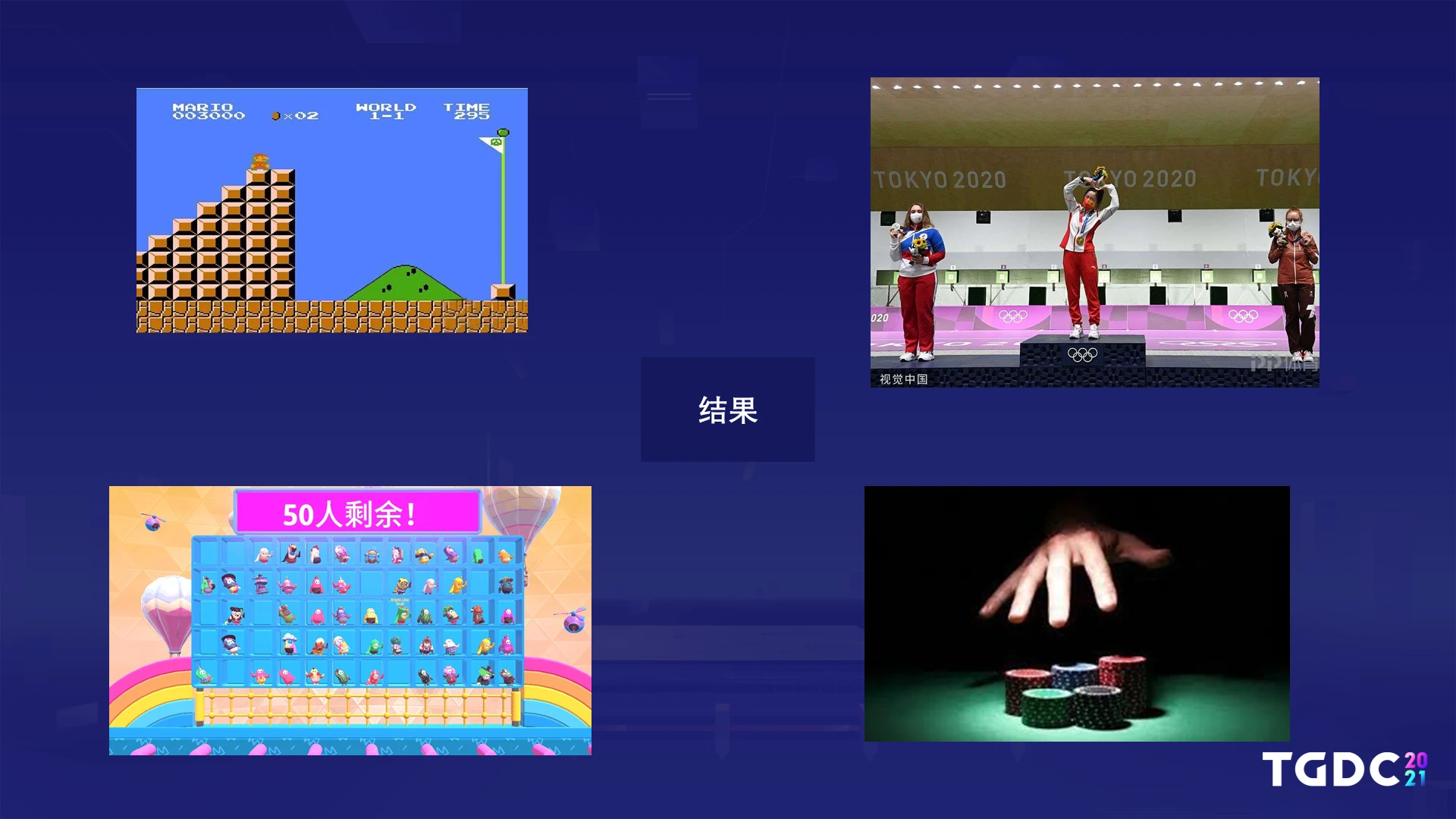
The presentation of an outcome is fascinating. In Mario, finishing a level has a ritual: the flag comes down. That is a classic, ceremonial way to show a result. The medal ceremonies we remember from the recent Tokyo Olympics provide another example. In Fall Guys, a television-show-like display of fifty contestants shows who has failed and who has succeeded.
If I receive a substantial reward, how is it presented? Failure should not simply become a dispiriting moment; ideally, it makes me want another attempt. Success should not become a display of superiority or arrogance, either. It should create an impulse to share the joy.
After all these methods, perhaps things are becoming a little dry. I drew these ideas from my earlier practical work. At the time, I was not consciously checking whether each method was present in those projects. Later, I looked back and asked where those methods had already appeared in practice.
I will now discuss several projects I worked on myself. I hope these small practical examples will offer some inspiration. Much of the material that follows has not been shown publicly before this talk, which makes it especially interesting to share.
Case study 1
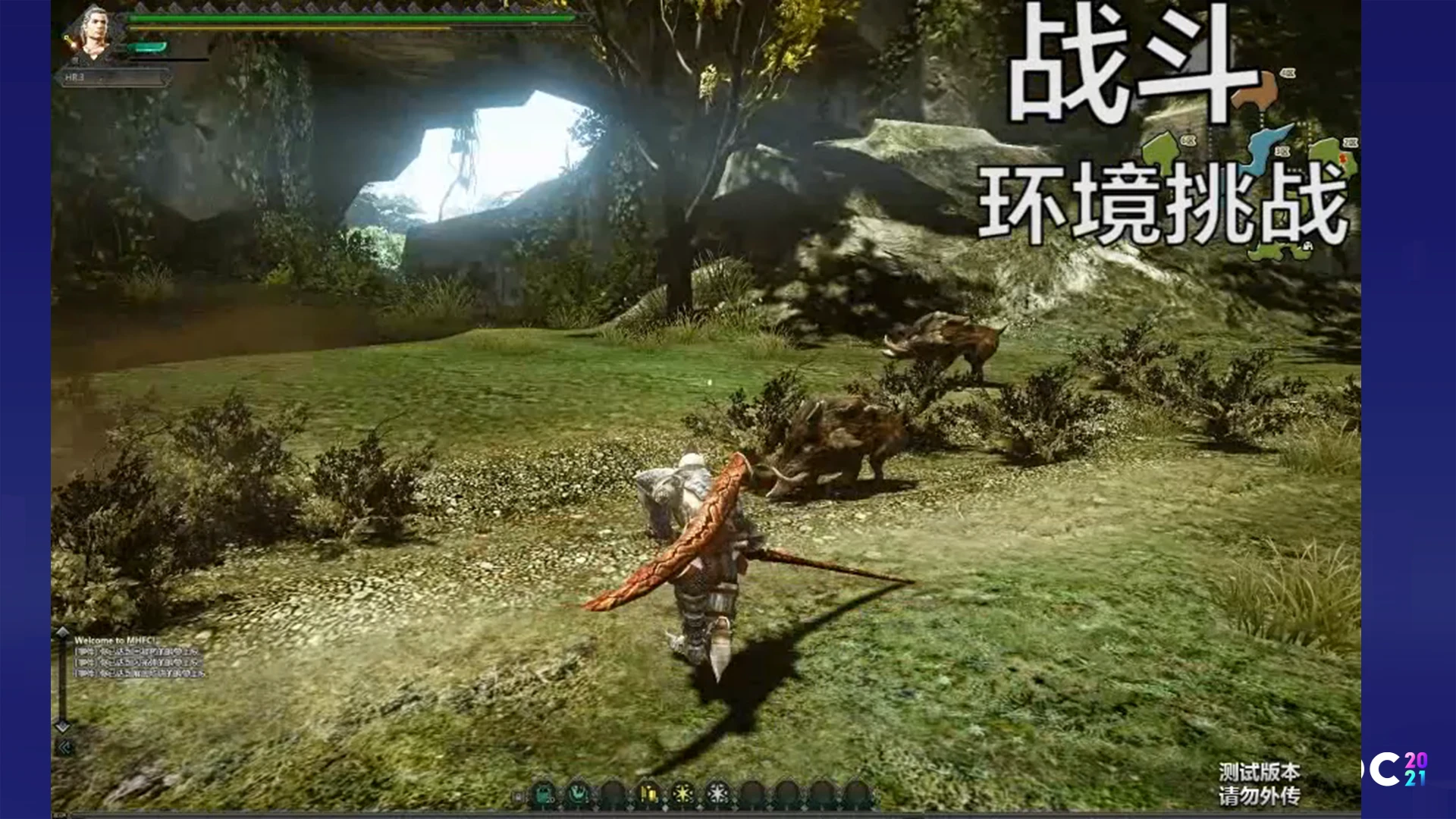
This is Monster Hunter, a project from around 2011. As a level designer, I asked what kinds of challenges I could introduce into its environment. I analyzed the pacing of a level. While fighting Rathian, perhaps players could face environmental challenges too, such as small boars interfering with the battle.
Could a fireball ignite the grass? Would burning grass make the fight more difficult or create new movement routes? With multiple players, could keeping Rathian from setting the grass on fire become a form of tacit coordination between teammates?
If the grass is already burning, how should a player respond? With four players fighting Rathian, would it become easier to catch fire and would the situation grow progressively harder? Different players could take responsibility for preventing fires, while the challenge itself became more demanding.
Then I noticed a nearby waterfall. Could water extinguish the fire? Could we lure Rathian into striking the waterfall with a fireball, bringing water down to put the flames out? There is a small puzzle in that. Viewed through identity, motivation, challenge, trade-offs, and outcomes, this was a modest improvement primarily along the challenge dimension.
Fire burns grass and water puts it out: the idea is simple. This design dates from around 2011. Later, Monster Hunter: World and the environmental interactions in Breath of the Wild added many physical and natural elements to enrich and vary the challenges players encounter.
Case study 2
The second example is a new shooter I worked on at NExT, built around mech combat. Let us watch the video first.
I still feel a little excited whenever I watch this footage. It is not because the video itself is especially impressive; it is a gameplay demonstration. The project was stopped partway through development. But NExT Studios' spirit of innovation made it possible to take a step forward in gameplay design and to make this experiment at all.
As the video shows, this was an asymmetric PvP game. Four combatants piloted a mech on the attacking side, while eight soldiers defended against them. The attackers could operate the mech together, or dismount to resupply and escort it, creating combined infantry-and-vehicle action. Players switched between driver, gunner, and infantry roles in real time during combat. That is a change in identity within the experience itself.
Players may already know the experience of four people fighting a huge monster in Monster Hunter. But what if the monster the defenders had to stop were controlled by a four-player team? Would that challenge produce a more exciting story than fighting an AI boss with a fixed behavior tree? After all, the intelligence on the other side is a team of four people.
There is much more to say about this project, including motivation, trade-offs, and outcomes. But in identity and challenge, I think it gave players more room to create stories on the stage we provided.
Case study 3
Arena Breakout is the project I am currently working on. Its identity, motivation, challenge, trade-offs, and outcomes fit this approach to player-generated narrative particularly well. Each trip into the Dark Zone brings surprises and change; the popularity of streams of this kind of game also reflects that.
In terms of identity, you might be a fully equipped veteran or someone out for a lightly equipped knife run. Your motivation might be to defeat everyone or simply scavenge. In challenges, shooting skill still matters greatly. Your trade-off is whether to quit while ahead or push greedily onward. Whether you leave with a huge profit or lose everything depends on both skill and mindset. Our design focus is whether every trip, for every kind of player, can become a unique story.
A small exercise
Could we use these methods to modify an existing game and increase its capacity for player stories? So far, I have asked whether these stories have value, whether there are ways to design for them, and whether my own projects have improved that value in practice.
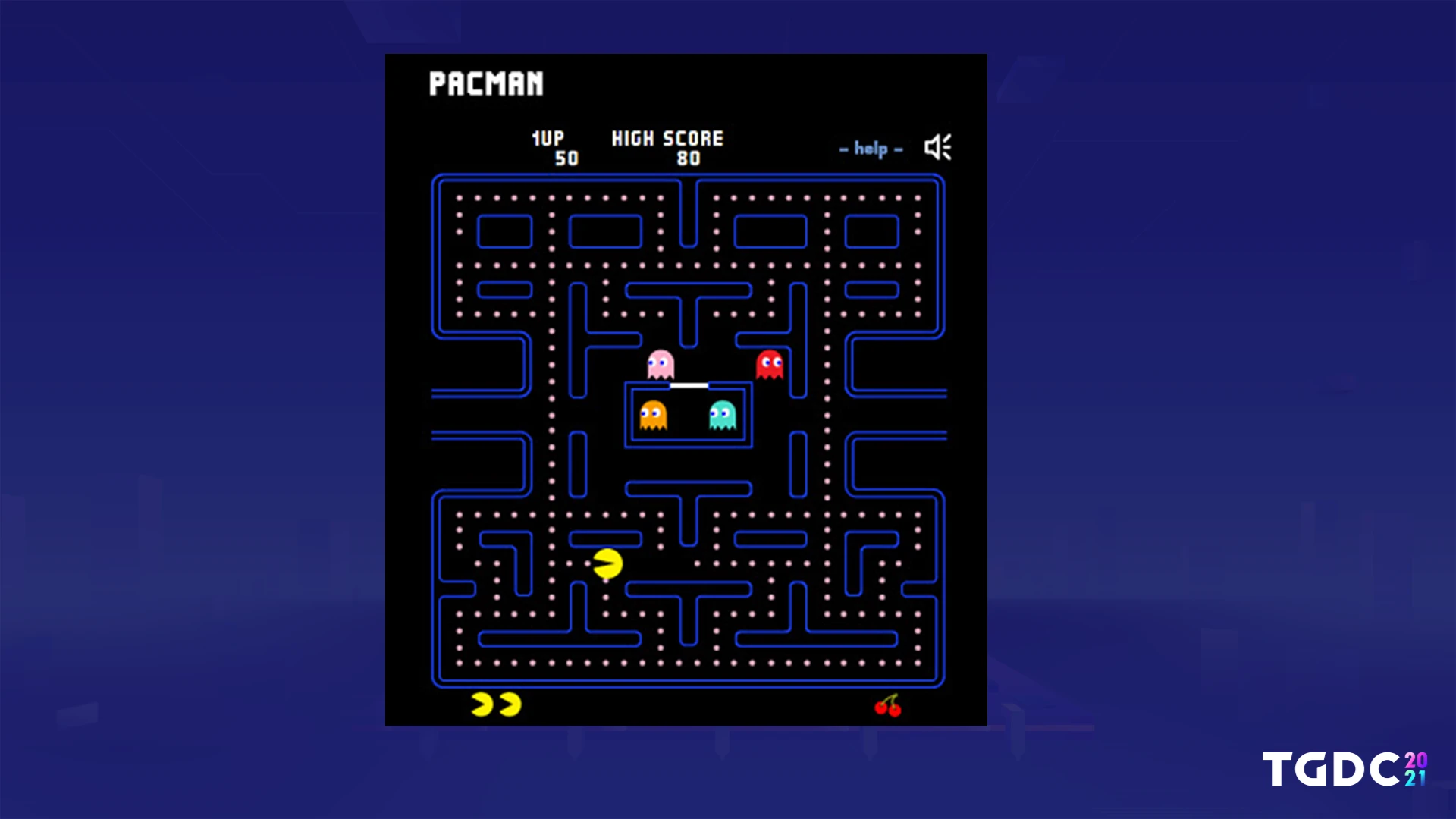
Let us finish with an exercise using a traditional game. I will venture to use Pac-Man as an example. Imagine different Pac-Man characters, four players on the same screen, and other players controlling the ghosts. That would introduce differences in identity.
For motivation, suppose victory no longer required eating every pellet and reaching the exit. Perhaps eating some pellets and escaping would be enough. Or competing with other Pac-Man players could be a motivation in itself.
For challenge and trade-offs, perhaps eating more pellets would slow me down and expose me to other Pac-Man players. For the outcome, the pellets I carry out could become my score, and I could use that score to improve my character.
This is only a small example. I hope these methods encourage you to think about possible improvements to your own projects. How would a streamer play your game? What would it look like as an esports match? Does the world give players enough alternatives? Must they fight, or could they simply scavenge and develop their character? I think this is a worthwhile exercise for every designer here.
Closing thoughts
Finally, I compared player stories with the traditional three-act structure. In a film, we recognize a beginning, conflict, and a climax. What is different about a player story? Given the same stage, different players can have entirely different beginnings, conflicts, and climaxes.
As the designer of that stage, you need to allow conflict to arise, offer different paths at the beginning, and provide enough release at the climax. That differs from a traditional approach to game design. You provide a stage and props that support the overall rhythm, rather than acting as a director who precisely controls each player's intended experience.
If you forget everything else, I hope you remember three takeaways. First, consider shareability: can someone easily tell another person about the experience? Second, examine identity, motivation, challenge, trade-offs, and outcomes, and ask whether any of those dimensions can strengthen player-generated narratives. Finally, aim for a self-driven experience: players should log in for the experience itself, rather than merely for rewards.
That is the end of my talk. I hope more game designers will become designers of worlds and stages for players, rather than trying to control every player's experience precisely. Thank you!
Questions and answers
Q1: Do games with user-generated content strengthen or weaken player-generated narratives?
A — Zhang Fan Jun: They certainly strengthen them. Look at games such as Robocraft, Minecraft, Garry's Mod, and other construction-oriented games. Players have more room and more content they can create. Their identities are also more distinctive: some are creators, and the characters they create are more varied. The experience becomes richer, so more player stories can arise.
Mod tools offer many ways to create and can extend a game's life; the principle is similar. Giving players more space and opportunities to create should increase the game's capacity for player-generated stories.
Q2: If a game has a great deal of player-generated narrative, could that weaken its atmosphere, world-building, or original story?
A — Zhang Fan Jun: One concern is that, as stories between players grow, fewer connections might develop with NPCs, the game world, or the story background. But imagine a game like the world of Sword Art Online, or a setting that is already strong and deeply familiar to players. Such a setting can combine its own story with player-generated narratives very effectively.
Unique player stories can arise in a magical world or a science-fiction world; they are not limited to modern or historical settings. I hope that answers the question. That is roughly how I see it.
Sources and public references
The Chinese transcript was published by Tencent Game Academy. The additional reports document the same talk.
- Tencent Game Academy — TGDC: Creating Player Stories (Dec 16, 2021)
- GameRes — The Value and Practice of Designing Player-Generated Narrative Experiences (Nov 24, 2021)
- China.com — Creating Player Stories: TGDC Talk Transcript (Nov 23, 2021)
License stated on the original public page: CC BY-NC-ND 4.0。The original speech remains attributed to its author.
Open the original slide appendix · 27 pages
These are the original archived presentation slides. Text within the images remains in its original language.